
How to Start a Podcast Email List From Zero

To start a podcast email list from zero: pick a free tier of any email tool, give listeners one specific reason to hand over an address, put the signup form in three places they already see, your show notes, the spoken end of each episode, and your link-in-bio, then send one short welcome email automatically. That covers everything you need before subscriber one.
The reason to bother is simple and a little uncomfortable. Every platform that gives you an audience can take it back: a feed re-rank, a banned format, a deprecated app. An email address is the only piece of your audience you actually own. A follower is a loan; a subscriber is yours. The first hundred of them is the part you fully control, and this is the playbook for building it without a marketing budget or a six-step funnel.
Why bother with email when you already have followers?
Email is the one audience channel a platform cannot quietly throttle. Followers see your post when the algorithm decides; subscribers get your email in an inbox they check on purpose. That difference matters most early, when you have almost no reach to lose, and it matters even more given how fragile new podcasts are.
Here is the honest stakes-setter. About 47% of podcasts stop at three episodes or fewer (Amplifi Media analysis), and most quit before any audience exists to disappoint them. The shows that survive almost always have a direct line to listeners that does not depend on being discovered again each week. Email is the cheapest version of that line. It will not make a bad show good, but it stops a good show from leaking the audience it earned.
One caveat worth stating plainly: an email list grows slower than a follower count, and it should. A thousand passive followers are easier to collect than a hundred people who typed their address. The hundred are worth more, because they asked to hear from you in the one place that still gets opened.

Step 1, Pick a tool and make one decision, not ten
Open a free tier and stop researching. ConvertKit (now Kit), MailerLite, Beehiiv, and Substack all have free plans that handle your first few hundred to few thousand subscribers at no cost. The differences barely matter at zero. What matters is that you start before you have a "system," because the system can wait and the audience cannot.
Two practical filters at this scale. First, pick a tool that lets you build a hosted signup page, so you have a link to paste before you ever build a website. Second, avoid anything that charges per email send at low volume, you want flat, free, and forgettable until you cross a thousand subscribers. Substack is the path of least resistance if you also want a public newsletter archive; Kit or MailerLite if you want more control over forms and automation. Either is fine. Choosing is the win.
Step 2, Give one specific reason to subscribe
Nobody subscribes to "join my newsletter." They subscribe to get a specific thing they want. Your job is to name that thing in one line and deliver it the moment they sign up. This is the lead magnet, and at the start it should cost you almost nothing to make.
The strongest podcast lead magnets are byproducts of the show you already record: the resource list a guest mentioned, a one-page summary of your best episode, a "start here" guide to your back catalog, or the bonus answer to a question you cut for time. A true-crime show can offer a sources-and-timeline sheet; a business show, the framework a guest sketched out loud. Pick something a listener would screenshot if they could. For a deeper menu of options that actually convert, see our breakdown of podcast lead magnets that earn signups.
Avoid the generic ebook. A 40-page PDF nobody reads signals effort, not value. One genuinely useful page beats it every time, and you can make it this afternoon.
Step 3, Put the form where listeners already are
A signup form converts nobody if it lives on a page they never visit. For podcasters there are exactly three placements you fully control, and you should use all three. Each catches a different listener at a different moment.
- Show notes, the first line, every episode. Most listeners who tap your show notes are your most engaged. Put the signup link and its one-line reason at the very top, not buried under timestamps. Repeat it on every episode; the person ready to subscribe is rarely the one reading your launch episode.
- Episode-end spoken CTA, ten seconds, at the moment of peak goodwill. Whoever is still listening at the end is your warmest possible lead. Ask out loud, once, for the address, and name the lead magnet: "If you want the resource sheet from today, the link's in the description." Spoken asks convert because they reach people who never read notes.
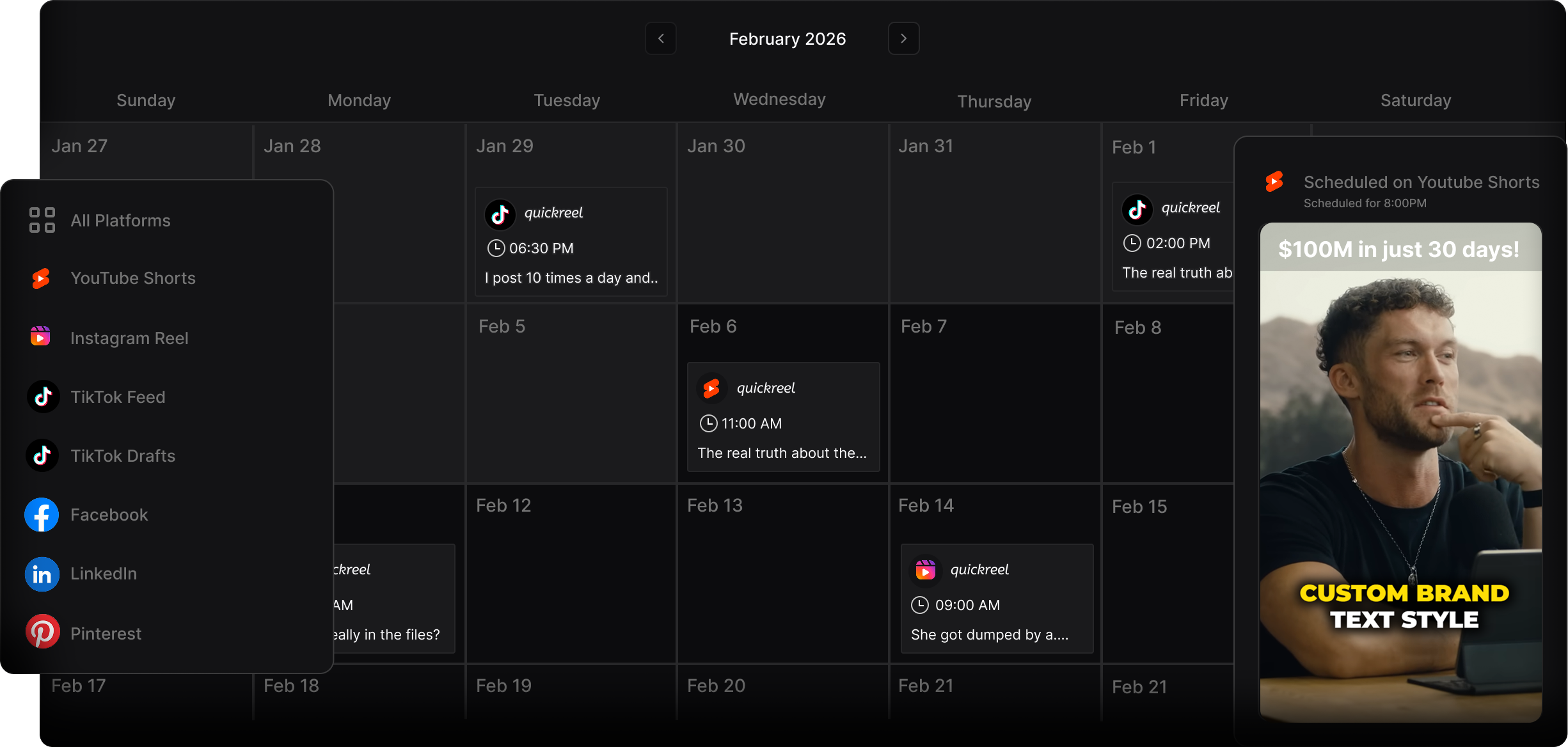
- Link-in-bio, the catch-net for clip viewers. People who find you through a clip do not land in show notes; they land on your profile. A link-in-bio page (or a single hosted signup page) turns that traffic into subscribers. This placement only earns its keep if clips are actually sending people to your profile, which is the whole reason clips and email belong in the same plan.
That third placement is doing quiet work. Social media has overtaken personal referrals as how people find podcasts, 57% of listeners now rely on social media for recommendations versus 54% on friends and family (InsideRadio), a shift researchers credit to video and clips, and posting clips consistently can lift discovery reach 2 to 5x (Podcast Studio Glasgow). Clips are how strangers find you; the link-in-bio is how you keep them.
Step 4, Write the welcome email (the one that does the heavy lifting)
The welcome email is the single most-opened message you will ever send, a new subscriber's interest is at its absolute peak the second they sign up. Send it automatically and immediately. A confirmation receipt is a wasted opportunity; this email should do five specific jobs.
Deliver the promised thing first, before anything else, link at the top, no scrolling. Then set expectations ("you'll hear from me every other Tuesday with the one clip and idea worth your time"), so the next email is not a surprise. Give two human lines on who you are. Point to a single best episode, not your archive, because a list of ten links gets zero clicks. And end by asking for a reply, a one-word answer to a real question. That last move quietly tells email providers your messages are wanted, which protects your future deliverability. When you are ready to extend this into a multi-email arc, our five-email welcome sequence for new subscribers maps the next four.
Step 5, One list or segments? (the small-scale answer)
One list. Until you are past a few hundred subscribers, segmentation is a trap that adds work and improves nothing. At zero, everyone signed up for the same reason, the show, so there is nothing to segment by yet. Send one email to one list and spend the saved time making the show better.
The one early exception: tag the lead magnet someone signed up through, even on a single list. It costs nothing, and later it tells you which magnet and which placement actually pulls. Real segmentation, by topic interest, by engagement, by listener-versus-clip-viewer, earns its complexity only once you have enough subscribers that a split list still leaves each segment worth emailing. Cross that bridge at a thousand, not at ten.
| List approach | When it fits | The catch |
|---|---|---|
| One list, no segments | 0 to a few hundred subscribers | None, this is correct for you now |
| One list + signup tags | Any size, from day one | Tag, do not split; review later |
| Multiple segments | 1,000+ engaged subscribers | Each segment must stay big enough to matter |
Common mistakes that kill a new list
- Waiting for a website. You do not need one. A hosted signup page from your email tool is a link you can paste in show notes and bios today. The website is a later upgrade, not a prerequisite.
- Asking for the signup with no reason. "Subscribe to my newsletter" converts almost no one. Name the specific thing they get and deliver it instantly.
- Going silent after signup. A list you do not email is a dead list. If you cannot commit to even monthly, send monthly, consistency beats volume, and a quiet list forgets you within weeks.
- Buying or importing addresses. Never add someone who did not opt in. It tanks deliverability and erodes the only thing email has going for it, which is consent.
- Treating email and community as the same channel. Email is a broadcast you own; a Discord or forum is a conversation listeners have with each other. They do different jobs, if community is the goal, start with setting up a Discord for your listeners and compare options in where to build a podcast community.
FAQ
How do I get my first email subscribers with no audience? Lead with the warm listeners you already have. Add the signup line to show notes and a spoken end-of-episode ask, then point everyone who finds you through a clip to a link-in-bio signup page. Your first subscribers come from the same people who become your first 100 listeners, reached by hand, one specific reason at a time.
What email tool should a beginner podcaster use? Any free tier will do at the start: Kit (ConvertKit), MailerLite, Beehiiv, or Substack all handle your first few hundred to few thousand subscribers free. Pick one that gives you a hosted signup page so you have a link before you have a website. Do not over-research it, switching later is easy; starting late is the only costly mistake.
How often should I email my podcast list? As often as you can sustain forever, which for most new shows is weekly to monthly. Pick a cadence, state it in the welcome email, and keep it. A predictable monthly email beats an erratic weekly one, the list forgets a silent sender within a few weeks, and re-earning attention is harder than keeping it.
Should podcast email and podcast community be the same thing? No. Email is a one-to-many broadcast you control and own; a community platform is a many-to-many conversation among listeners. Start with email because it is simpler and yours outright, then add a community only when listeners are already talking to you and each other. They complement each other rather than replace.
Does a list matter for a business podcast specifically? More than for most. A business show's value is its audience relationship, and email is the most direct version of that, it is also where guests and partners pay attention. If your show grows by relationships rather than raw downloads, see why business podcasts grow by booking guests first; the email list is where those relationships compound.