
Podcast Feed Drop Cross Promotion: Buying a Paid Slot

To buy a slot inside another podcast's feed, you pay a show with an overlapping audience to run a host-read promo or drop your episode into their feed, priced per thousand downloads rather than traded for a reciprocal favor. Find shows your ideal listener already follows, agree a CPM, write a tight brief, and put a tracking link on the offer so you can prove it worked. It is a cross-promotion swap with the reciprocity removed and money put in its place.
Free swaps are the textbook advice, and they work, until you want to reach a show three times your size that has no reason to promote you back. That is the gap the paid feed drop fills, and almost nobody writes about how to run one. This page does: how to find the right show, what a fair number actually is, and the exact brief that turns a paid slot into subscribers instead of a wasted hundred dollars.
What is a paid feed drop, and how is it different from a free swap?
A paid feed drop is a transaction: you pay another podcast to place your promo or full episode inside their feed, instead of trading promos host-for-host. A free swap needs a partner your size who benefits from promoting you back. A paid drop removes that constraint, you buy reach from a bigger show by compensating them for the slot.
The mechanics sit on a short menu. A paid host-read promo is a 30-to-90-second spot the host records and reads inside their own episode, the most common and the highest-converting, because it sounds like a recommendation. A paid feed drop publishes your entire episode into the partner's feed behind a short host intro, which transfers the most trust but eats a full slot. There is also the paid trailer drop, your produced trailer run as the spot. All three are bought, not bartered.
This sits beside the free-swap playbook, not on top of it. If you want the bartered version first, start with when paid podcast promotion is actually worth it before you spend.
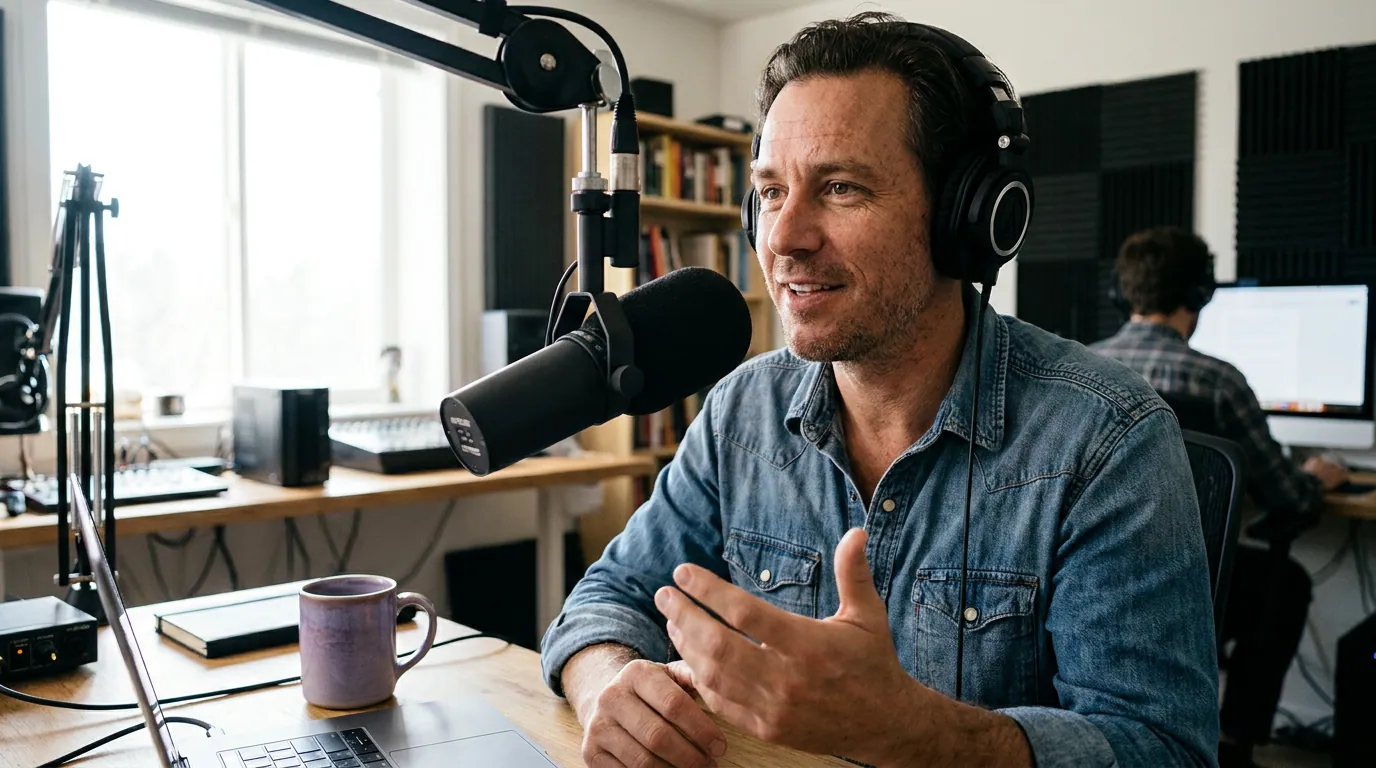
How do you find shows with overlapping audiences?
Look for shows whose listeners would plausibly subscribe to yours on first hearing, same niche-adjacency, same listener intent, slightly larger than you. The cleanest signal is shared guests and topics: if a show books the people you'd book, its audience is pre-qualified for your feed. Size up one to three tiers, not ten.
A drop into a show fifty times your size buys reach you can't convert, the audience is too broad and follows on a single mention almost never.
Build the shortlist in four passes:
- Mine your own analytics. Whatever your host reports, Apple, Spotify, your hosting dashboard, tells you which other shows your listeners follow and what they search. Those adjacent shows are your first targets, because the overlap is already proven.
- Map the guest graph. List the last ten guests you'd love to have. Find every other show those guests appeared on. Recurring names point you at the shows feeding the same audience.
- Search the category, not the chart. Browse the subcategory you actually live in, not the top 100. The show ranked #40 in a narrow category often has a tighter, more convertible audience than a generalist megashow.
- Check publishing pulse. Skip shows that podfaded. Roughly 90% of podcasts are no longer publishing (demandsage; The Podcast Host), so confirm the partner shipped in the last two weeks before you pitch a paid slot into a dead feed.
Score each candidate on three things only: audience overlap, whether they're still active, and whether the host reads ads themselves. A host who reads their own promos will read yours better than any produced spot.
What should you pay for a feed drop?
Price it per thousand downloads, the way the ad market does. Host-read mid-roll spots run roughly $15–30 CPM, climbing to $40+ in premium niches, with finance and high-net-worth audiences fetching $40–75 (Podscan, 2025). Multiply the show's average downloads per episode (in thousands) by an agreed CPM, then adjust up for a full feed drop.
A full episode drop transfers more trust than a 30-second promo and eats a full slot, so it sits at the top of that range or above.
Two honest caveats before you anchor on these. First, download numbers are self-reported by the partner, ask for a screenshot of their last few episodes' analytics, and remember that public benchmarks skew indie because Buzzsprout and Libsyn together host under 10% of podcasts while Spotify shares nothing (Buzzsprout stats). Second, many small shows have no rate card and will name a flat fee. A flat $50–150 for a host-read into a few-thousand-download show is normal; convert it back to a CPM to check you're not overpaying, then weigh it against what it costs to buy a podcast listener through other channels like Meta ads for your podcast.
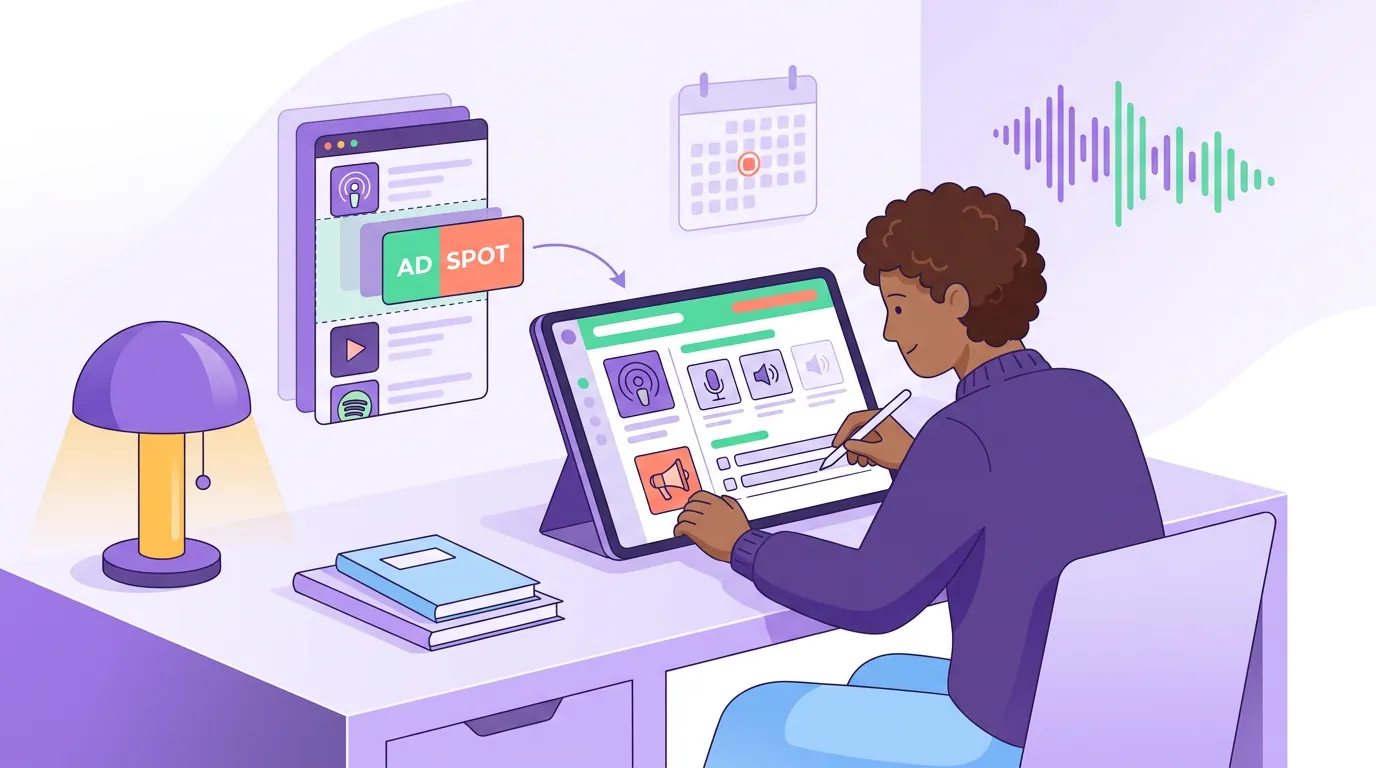
The feed-drop brief template
The single biggest reason a paid drop underperforms is a vague brief. The host doesn't know your show, so a host-read with no guidance becomes "go check out this other podcast, it's great", which converts almost nothing. Hand them a brief they can read in two minutes and improvise around. Copy this:
Show: [Your show name], [one-line description, who it's for] Why your listeners: We cover [topic overlap]. Your audience already cares about [specific thing], and that's our whole show. The hook (read in your voice): "If you liked [specific episode of THEIR show], you'll want [your best episode], it's where [specific, concrete payoff]." The ask: Tell people to follow [show] wherever they listen, and there's a link in your show notes. Tracking link: [your unique URL], this is how we both see it worked. Length: 45–75 seconds. Mid-roll preferred over pre-roll. Do say: [one or two phrases that land with your audience] Don't say: [anything off-brand or inaccurate] Sample episode to mention: [your single strongest, most self-contained episode]
The brief does two jobs. It gives the host language that sounds like them, and it points every new listener at one specific episode instead of your whole back catalog, so the first thing they hear is your best, not your oldest. Pair it with a welcome email sequence for new subscribers so the people who do follow don't drift after one listen.
How do you measure whether the drop worked?
Put a unique tracking link or a dedicated promo code on every drop and watch three numbers: clicks on that link, new followers in the 72 hours after the episode airs, and downloads of the specific episode you pointed people to. Those three tell you whether the hook, the host, and your episode each did their job.
A click spike with no follower lift means the hook landed and your sample episode didn't, fix the episode you point to, not the partner.
Don't judge a single drop in isolation. Recommendations from other podcast hosts now drive discovery for 42% of listeners, behind social media (57%) and friends and family (54%), but a channel a paid drop puts you directly inside (InsideRadio, 2025). The effect compounds over repeated exposure, so run three drops with the same partner type before you decide the channel works. And keep the honest frame: a paid drop buys you a first listen, not a loyal listener. What you do with that first listen, the episode quality, the follow prompt, the email capture, is what turns rented reach into an audience you own.
Frequently asked questions
Is a paid feed drop the same as a podcast ad? Mechanically, almost. A paid host-read promo is a podcast ad, the only difference is the advertiser is another podcast buying listeners instead of a brand selling a product. The feed-drop framing matters because you can also pay to place a full episode, not just a spot, which a normal ad buy doesn't include.
How big should the partner show be? One to three tiers above you, not more. A show with 3,000–8,000 downloads is an ideal first paid target for a show doing a few hundred: big enough to move your numbers, small enough that the host reads ads personally and the audience converts. A megashow's audience is broad and expensive and rarely follows a much smaller show on one mention.
What's a fair price if the show has no rate card? Estimate their downloads, apply a $20–30 CPM, and offer that as a flat fee. For a 4,000-download show that's roughly $80–120 for a host-read. If they counter higher because it's a full feed drop or a premium niche, that's reasonable, finance and business audiences command $40–75 CPMs (Podscan, 2025).
Should I pay or just do a free swap? Free first, paid second. Exhaust reciprocal swaps with shows your size, then pay to reach the shows that won't swap because they're bigger. Paid drops are how you break out of your own tier, not a replacement for the free network you should still be building.
Can I run a paid drop on a small or new show? Yes, and it's often the best value. A 1,000-download niche show with an engaged audience and a host who reads ads warmly can out-convert a show ten times its size. Judge on overlap and engagement, not raw downloads.