
Clipping Narrative Shows vs Conversational Shows


Clip a narrative show on its story beats and a conversational show on its moments. A scripted show, true crime, history, a written essay read aloud, earns clips from a built arc: setup, escalation, a withheld reveal. A conversation earns them from spikes: the laugh, the disagreement, the line nobody saw coming. Same 30 seconds, opposite shape.
This is a format distinction, not a topic one. A history show and a true crime show clip the same way because both are scripted, even though the subjects are miles apart. A business interview and a comedy hangout also clip the same way because both are unscripted talk. Below is the framework, a four-question test to place your show, a side-by-side cut-logic table, and the mistakes that come from clipping the wrong way for your format.
What's the difference between clipping a narrative and a conversational podcast?
Narrative clips are pulled from an authored structure, so you cut on the beat the writer already built, and you cut on the question, not the answer. Conversational clips are pulled from unrepeatable moments, so you cut around a single spike of emotion and let the payoff land inside the clip. One is trimming a trailer; the other is catching a moment that happened once.
The reason this matters for your edit: in a narrative show, the best clip is usually a span the host designed to be tense, and your job is to find its edges and stop before the resolution. In a conversation, the best clip is a thing that happened, a reaction, a one-liner, a sharp exchange, and your job is to give it just enough runway and a clean landing. If you clip a conversation like a narrative, you withhold a payoff that was the whole point. If you clip a narrative like a conversation, you spoil the reveal the host spent five minutes building.
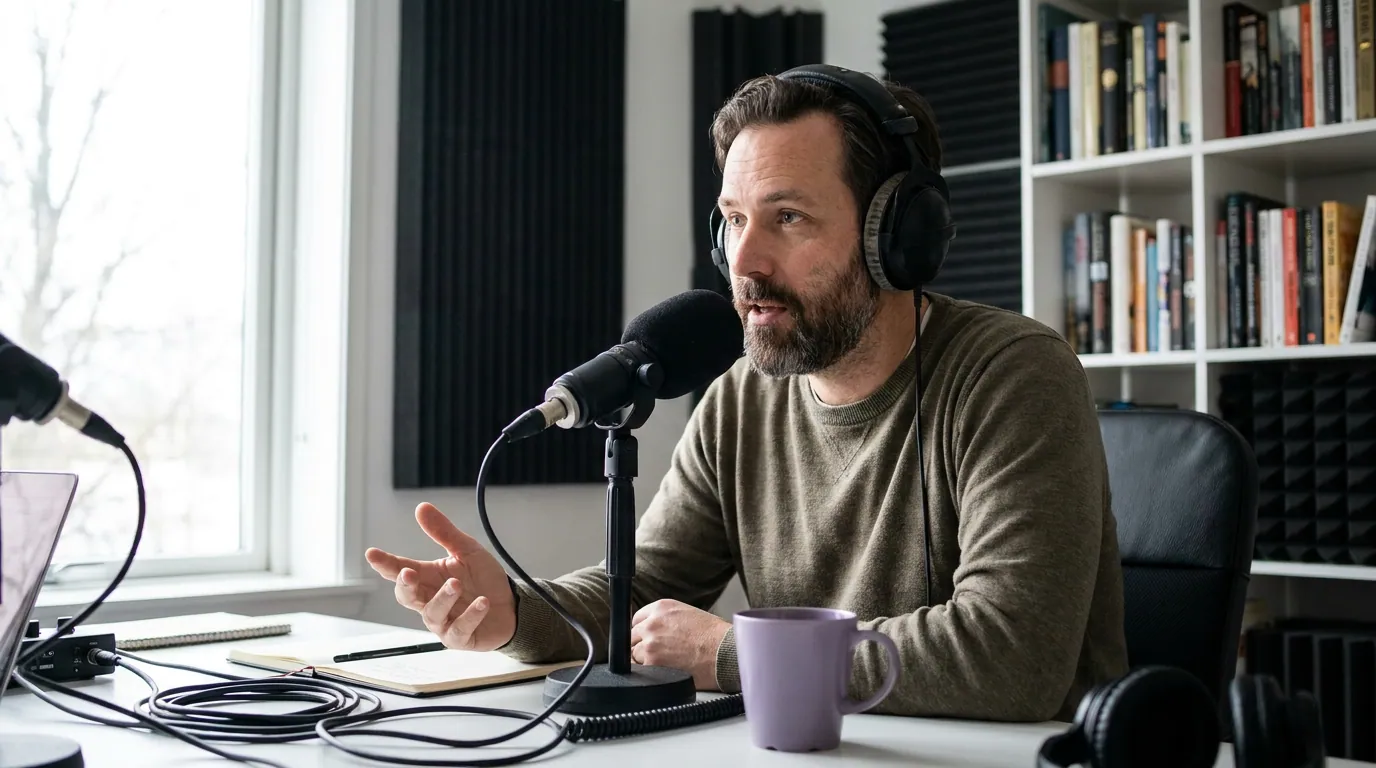
Why your show's production style decides the cut
Most clipping advice is sorted by topic, true crime tips, comedy tips, business tips. That hides the pattern. The thing that actually controls how a moment clips is how the show is produced, and production style runs on a spectrum from fully scripted to fully off-the-cuff.
There's real upside to clipping in your show's correct register. Short-form clipping has become a standard distribution channel, so feeds are more crowded, not less, and a clip that obeys its format's rhythm reads as intentional while the rest read as filler. For video shows, one studio's client data puts clips at 20–40% of new audience and a 2–5× reach lift (Podcast Studio Glasgow); treat that as directional from a single production house, not a platform-wide audit.
The 4-question diagnostic: which way does your show clip?
Run these four questions before you cut. Answer "yes" to most and you have a narrative show; answer "no" to most and you have a conversational one. The point is to settle the format first, then cut.
- Did someone write the words before the mic turned on? If the host is reading or following a script, the tension is authored, clip the beats. If they're talking and reacting in real time, the tension is emergent, clip the moments.
- Could this exact span be re-recorded the same way? Narrative spans are repeatable by design. A real reaction is a one-take. The more unrepeatable the moment, the more it wants a moment-cut with the payoff kept in.
- **Is the best part a thing that's revealed or a thing that happens?** A reveal (a verdict, a twist, a "then forensics found something") is a beat you withhold. A happening (a laugh, a clash, a confession blurted out) is a moment you keep whole.
- Does the energy build steadily or spike suddenly? A steady build over a minute is narrative shape. A flat stretch with one sharp spike is conversational shape, and the spike is your clip.
Most shows blend. A structured interview is scripted at the seams (the host's set-up questions) and unscripted in the answers, so you cut the lead-in like a narrative and the guest's reaction like a moment. The diagnostic isn't a label; it tells you which logic to apply to this span.
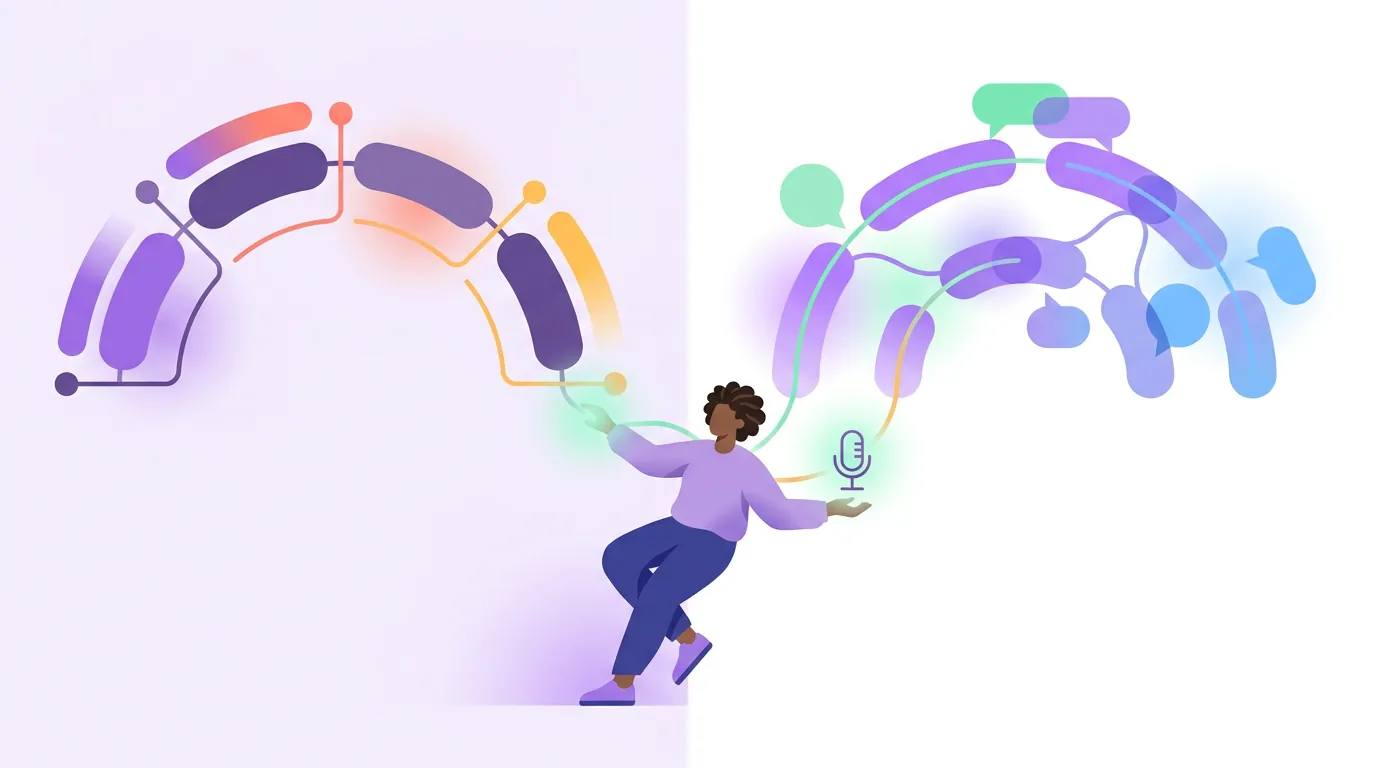
The two clip arcs, side by side
Both formats can fill the same 30 seconds. They just put the weight in different places. A narrative clip loads the end with a withheld reveal. A conversational clip loads the middle with a spike and lands the payoff before it cuts.
The narrative arc is the one detailed in where to end a true crime clip for max suspense, setup, escalation, and a cut on the line that promises the reveal. The conversational arc is the opposite instinct: the payoff is the point, so you keep it in and cut just after it lands, the way clipping comedy podcasts without killing the joke handles a punchline.
Cut logic, side by side
Here is the framework as a working table. Find your format's column and apply the row.
| Decision | Narrative (scripted) | Conversational (unscripted) |
|---|---|---|
| Where the clip lives | A span the host built to be tense | A spike that happened once |
| How you find it | Read the transcript for the arc | Scan the waveform/reactions for the spike |
| The hook (first 3 sec) | The stakes the writer set up | The setup line to the punchline or clash |
| The payoff | Kept off-screen, cut on the question | Kept in, cut just after it lands |
| The cut point | One beat before the reveal | One beat after the moment resolves |
| Ideal length | 25–60 sec (room for the arc) | 12–35 sec (tight around the moment) |
| Caption job | Carry the setup line legibly | Carry the line that triggers the reaction |
| Worst mistake | Spoiling the reveal | Burying the moment in lead-up |
Two rows do the heavy lifting. The payoff row flips the whole edit, narrative withholds, conversational delivers. And the length row follows from it: an arc needs runway, a moment needs trimming to its core. Everything else is downstream of those two.
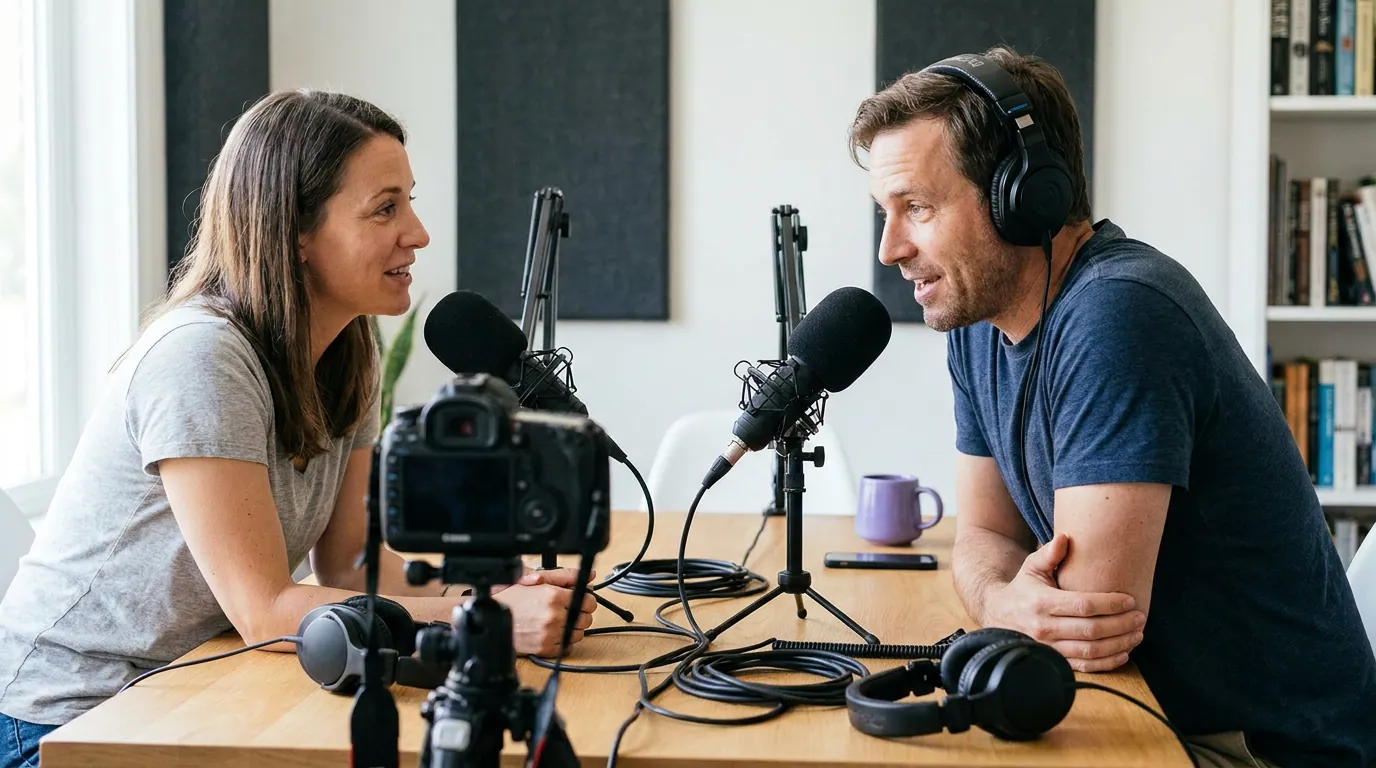
Where the best clips hide, by format
If you don't know your format, you hunt in the wrong place. Narrative gold lives in the scripted tension; conversational gold lives in the unplanned spikes. Same episode length, different search.
This is also why AI suggestions feel hit-or-miss across formats. Detection models bound a segment around a complete, self-contained thought, which is right for a conversation (a whole moment) and wrong for a narrative reveal (where you want to stop one line early). How AI clip detection actually works explains the mechanism, and the rubric for picking the best AI-suggested clips shows how to override the default, keep the AI's whole-moment cut for conversational clips, but drag the end back for narrative ones.
Common mistakes
Spoiling a narrative reveal because the AI included it. A model keeps the answer to make the segment feel complete. For a true crime or history clip, that closes the loop and gives the payoff away free. Drag the end handle back to the line before the reveal. (More on the genre-specific version in which true crime moments actually clip well.)
Withholding the payoff in a conversation. The instinct to "leave them wanting more" backfires on a laugh or a clash, the reaction is the content. Cut it off and you've posted a setup with no joke. Keep the payoff in; trim only the dead air around it.
Clipping a blended show with one rule. A structured interview is both. The host's question is scripted scaffolding (cut it like a beat); the guest's answer is live (cut it like a moment). Treating the whole span as one format flattens it. Turning a business podcast into shareable clips walks through this hybrid in detail.
Letting length default to one number. Narrative arcs need room to build; conversational moments die if padded. A 45-second clip of a one-line reaction is 30 seconds of waiting. Match length to format: arcs get runway, moments get trimmed to the core.
Reading the waveform for a narrative show. Scripted tension is in the language, not the audio energy, a calm, level voice can be the most suspenseful line in the episode. Read the transcript for narrative; the waveform's flat stretch is where the build often lives. Save the waveform scan for conversations, where the spike really is louder.
FAQ
How do I know if my show is narrative or conversational? Ask whether the words were written before the mic turned on. If the host is reading or following a tight script, it's narrative and you clip on story beats. If they're reacting and talking in real time, it's conversational and you clip on moments. Most shows blend, so apply the matching logic per span.
Can a single episode have both kinds of clips? Yes, and most do. A scripted cold-open is a narrative clip; a guest's off-script reaction later is a conversational one. Don't force one rule across the whole episode, decide format per moment using the four-question test, then cut that span in its own register.
Why can't I clip a narrative show on moments like everyone else? Because a narrative show's value is its built arc, and a moment-cut spoils the reveal that arc spent minutes building. Conversations earn clips from things that happened once and can't be redone; scripted shows earn them from authored tension you withhold. Cutting a narrative like a conversation gives the answer away.
Does clip length really change between the two formats? It does. A narrative clip needs 25–60 seconds so the setup-escalation-reveal arc can build. A conversational clip works at 12–35 seconds because a real moment is brief and padding it dilutes the spike. Let the format set the length, not a platform default.
Why does AI clip detection work better on conversational shows? Detection models bound a segment around a complete thought, which matches how a conversational moment naturally resolves. For a narrative reveal you want to stop one beat before completion, so the AI's whole-segment cut over-includes the answer. Keep its cut for conversations; trim the end back for narratives.