
Narrative Podcast vs Conversational: Plan Two Shows

A narrative podcast is a written, edited, produced piece, the value lives in the writing and the cut. A conversational podcast is a captured exchange, the value lives in who's talking and the chemistry. They look similar in a feed and behave nothing alike behind the scenes. Pick the wrong build and you either drown a chat show in production it never needed, or starve a story format of the editing it can't live without.
This is the planning decision that quietly sets your entire workload before you record a second of audio. Below: the two models compared across the four real costs (prep, scripting, editing, team), plus a narrative beat sheet and a conversational runsheet you can copy, and a rule for not over- or under-building.
What's the difference between a narrative and conversational podcast?
A narrative podcast tells a story or builds an argument through scripted, edited segments, think Serial, This American Life, or a solo essay show. A conversational podcast records people talking, mostly unscripted, interviews, two-host banter, panels. Narrative is written then performed; conversational is captured then trimmed.
The distinction that matters isn't the topic. You can do true crime as a tightly scripted narrative or as two friends reacting to a case in real time. You can do business advice as a produced solo essay or as a loose interview. The format is a production choice, not a subject. And it's the single choice that decides whether your week is built around writing and editing or around booking and recording.
Most new hosts pick conversational without deciding to, because it's the lower-friction default: turn on two mics, talk, publish. That's usually the right call, but only if you know what you're trading away, and what a narrative show would have asked of you instead.
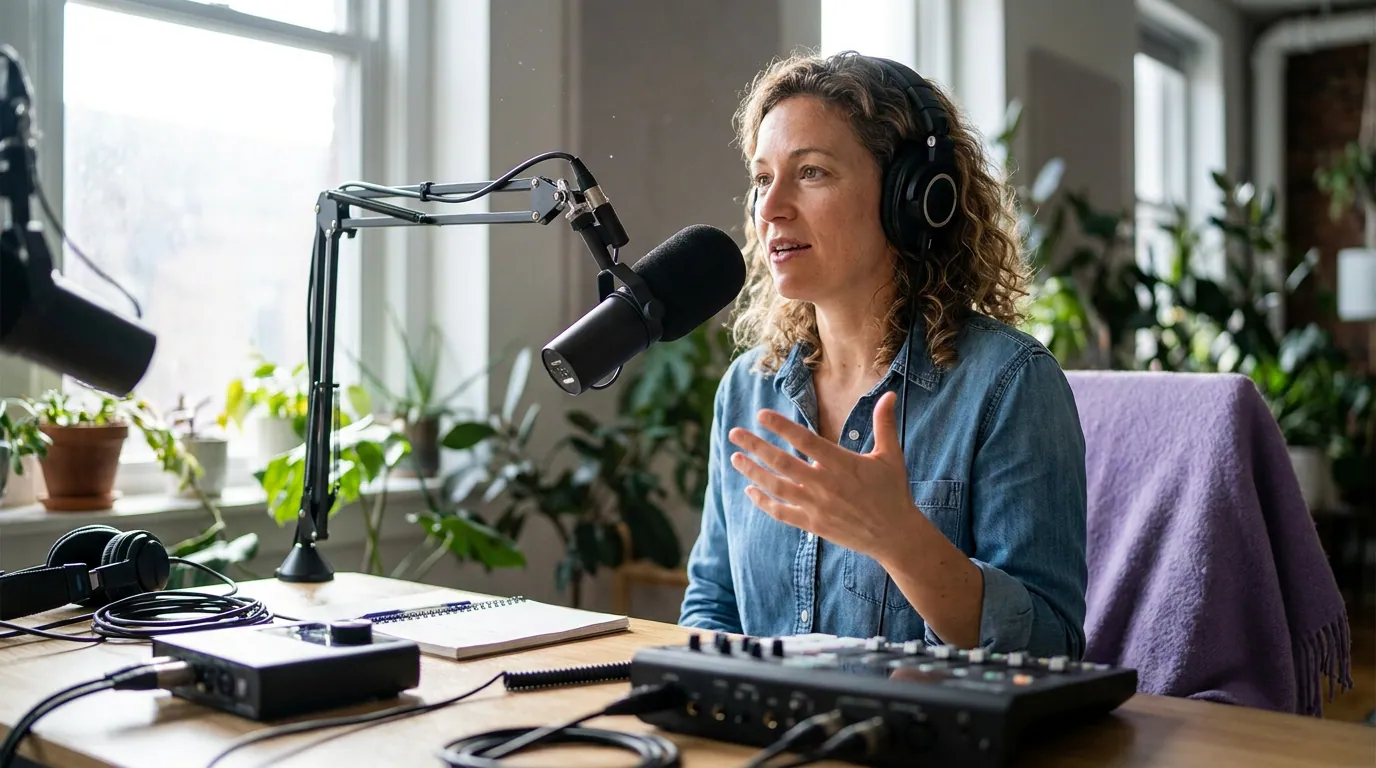
The two builds, side by side
Here's the honest comparison across the four costs that actually shape your workload. Narrative front-loads everything into writing; conversational front-loads almost nothing and accepts more variance in the result.
The fourth cost, team, is where this gets real. A polished narrative episode is hard to make alone: it usually wants a writer, an editor, and sometimes a sound designer, even if all three are the same exhausted person wearing different hats on different days. A conversational show is genuinely a one-person job: you book, you record, you do a light edit, you publish. That asymmetry is the whole decision in one line.
Why prep and editing trade places
Notice what swaps. In a narrative show, the work happens before the mic (writing) and after it (editing), and the recording itself is the quick part, you're reading a finished script. In a conversational show, the recording is the work, and prep and editing are thin on either side.
This matters for your calendar more than your craft. Narrative work is plannable: write three scripts on a Sunday, edit them across the week. Conversational work bends to other people's calendars, your guest cancels and there's no episode, full stop. For how that plays out across solo, co-host, and interview setups, choosing your core format goes deeper on the people side.
Where the hours actually go
Both models can eat the same total time. They just spend it in completely different places, and that's what makes one feel sustainable to you and the other feel like a second job.
One more thing the chart can't show: variance. A narrative episode is repeatable. You write, record, edit, ship, roughly the same every time. A conversational episode is a coin flip on quality, because it depends on a guest you can't fully control. Some days the chemistry is electric and the edit is nothing; some days it's flat and no trimming saves it. You're trading the predictability of narrative for the lightness of conversational.
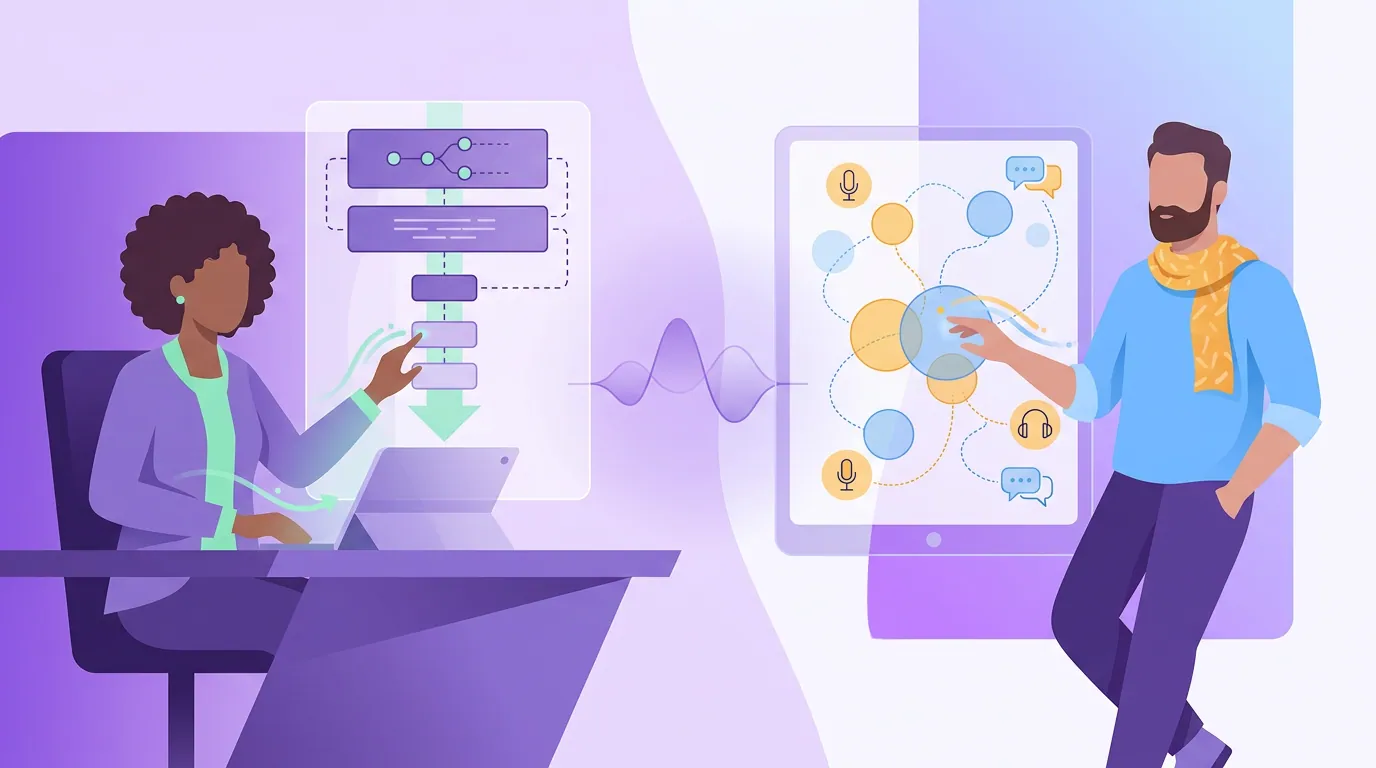
The narrative beat sheet vs the conversational runsheet
This is the part most format guides skip: the two builds use two different planning documents, and using the wrong one is how shows over- or under-build. A narrative show plans with a beat sheet, the emotional and informational steps of the story, written out. A conversational show plans with a runsheet, the loose order of segments and prompts, nothing scripted. Here they are side by side.
The shared edges are deliberate. Both formats benefit from a scripted cold open and a scripted outro plus call-to-action, those are the two moments where winging it costs you listeners and conversions, regardless of format. Everything between them is where the two builds diverge: the narrative show scripts it all, the conversational show leaves it open. If you want the deeper version of this, what to script versus what to leave loose, picking the right prep for your show breaks down the three prep artifacts in detail.
How to use the beat sheet (narrative)
Write each beat as a paragraph, not a bullet. The beat sheet is the skeleton; the script is the flesh you add next. Build it in this order: nail the cold open, then the climax, then work backward to the setup that makes the climax land. Most weak narrative episodes are weak because the writer started at the beginning and ran out of energy before the payoff.
How to use the runsheet (conversational)
Keep it to one page and treat every line as a prompt, not a script. Write three or four prompts under the meaty topic so you never go blank, but don't write the questions out as full sentences, read-aloud questions sound canned and you stop listening to the answer. The runsheet's only job is to stop the conversation from stalling and to remind you of the cold open and CTA. For a reusable spine you can drop a runsheet into, a repeatable episode structure keeps your segments consistent week to week.
The rule for not over- or under-building
Match your production to where your value lives, not to the shows you admire. Run these three questions in order; the first clear answer wins.
- Is the value in the writing, or in the people? If a stranger could deliver your script and it would still be good, you have a narrative show, build for editing. If the draw is the specific guests and the chemistry, you have a conversational show, build for booking and capture. Don't dress up a chat show with sound design it doesn't need.
- Can you sustain it every week? Narrative is more work per episode and harder to do alone. If you're a solo host with a day job, a fully produced narrative show is the most common reason a podcast quits early. Nearly half of all podcasts stop at three episodes or fewer, and most that fade do so between episodes 7 and 25, right before traction usually arrives (Command Linux, on podfade). Consistency beats polish, and conversational shows are far easier to keep consistent.
- Do you have, or want, a team? If yes, narrative becomes viable, split writing, recording, and editing. If it's just you and it has to stay that way, a conversational format is the honest choice. You can always add production later; you can't add hours that don't exist.
The trap cuts both ways. Under-building looks like a true-crime story show recorded as an off-the-cuff chat, the format demanded research and a script the hosts never wrote, so it sounds shallow. Over-building looks like a two-friends comedy show with a sound designer and a 20-hour edit, the chemistry was already the product, and the budget buys nothing the audience asked for.
Common mistakes when choosing a format
Copying a show's sound without its team. A flagship narrative podcast has a staff. If you love that sound and you're solo, either accept a much smaller output or pick a lighter format. Admiring the result is not the same as being able to make it weekly.
Recording a story format conversationally. Some topics, investigations, history, anything that needs structure and facts in order, fall apart without a script. If your "conversation" is really one person explaining a researched topic, it's a narrative essay wearing a conversation costume. Write it.
Over-editing a conversation. A heavy, music-laden edit on a casual chat show often makes it worse, it kills the looseness that made it likeable. Light editing (trim, level, cut the dead air) is the right amount; removing pauses and tightening pacing is most of the job.
Picking by runtime instead of value. Length doesn't decide format; a narrative show can be eight minutes and a conversation can run two hours. Decide format first, then settle runtime, how long an episode should really be is its own call, downstream of this one.
Refusing to switch. Some shows are hybrids by design, a scripted narrative segment, then an unscripted interview. That's fine, as long as each segment uses the right document: beat sheet for the story, runsheet for the talk. Switch tools by segment, not loyalty to a label.
Frequently asked questions
Is a narrative or conversational podcast easier to start? Conversational, by a wide margin. It needs a one-page runsheet, a guest or co-host, and a light edit, genuinely a one-person job. Narrative needs research, a written script, and heavier editing, and it usually wants more than one set of hands. Most beginners should start conversational and add production only if the show calls for it.
Can a podcast be both narrative and conversational? Yes, many shows are hybrids. A common build is a short scripted narrative segment to set up a topic, then an unscripted interview about it. The key is using the right planning document for each part: a beat sheet for the scripted story, a runsheet for the conversation. Don't try to script the interview or wing the narrative.
Which format gets more listeners? Neither wins on format alone. Conversational shows fill the charts mostly because they're easier to publish consistently, and persistence is what survival tracks, shows that last hold 100-plus episodes while quitters stall under 10 (Command Linux, on podfade). Only about 16% of podcasts are even active (The Podcast Host industry stats). A well-made narrative show in a thin niche can stand out precisely because it's rare.
How much editing does each format really need? A conversational episode usually needs a light pass: trim the start, level the audio, cut long pauses, often under an hour for a clean recording. A narrative episode needs a heavy pass: assembling segments, scoring, sound design, tight cuts, frequently several times the runtime in edit hours. Budget editing time before you commit.
Do I need better gear for one over the other? Not really, both need clean audio first. A treated room and good mic technique matter more than the format you pick. Narrative shows lean harder on a quiet, controlled recording because there's nowhere to hide a noisy take in a polished edit, but the budget mic that gets you started serves either format fine. Gear is downstream of the build.
The format isn't a style choice you make once and admire. It's a commitment to a weekly workload, and the two builds ask for nearly opposite things. Pick the one whose costs you can actually pay every week, and if you're between them, start conversational, because you can always batch a few episodes ahead and add production later, but you can't manufacture the time a full narrative show quietly demands.