
How to Plan a Podcast Before You Record (Worksheet)

Before you record a single second, fill one page: your show's promise (what a listener walks away with every episode), the one person you're making it for, your format, and a rough episode-zero outline. If you can write those four things in plain sentences, the concept is real. If you can't, recording first just buries the problem under audio. This guide is that worksheet, field by field.
The stakes are concrete. Roughly 47% of podcasts stop at three episodes or fewer Amplifi Media2025), and a large share of that quitting traces back to a concept that was never pinned down, a show that's "about whatever I find interesting," made for "everyone," with no promise a listener can repeat. Planning on paper is the cheapest insurance you'll ever buy against that cliff. It costs an hour and saves you the episode-three crisis.
What does planning a podcast actually mean?
Planning a podcast means deciding what the show is, who it's for, and what each episode reliably delivers, before any of that gets locked into recordings. It is concept work, not gear work. The deliverable is one page you can hand to a stranger so they can describe your show back to you in a sentence. Equipment, hosting, and cover art come after.
Most "how to plan a podcast" advice jumps straight to microphones and RSS feeds. That's backwards. A clear concept on a $70 mic beats a fuzzy concept on a $1,500 rig every week of the year. The plan is the part that decides whether you still want to publish at episode twelve, and it's the part almost everyone skips because it doesn't feel like progress. It is the progress.
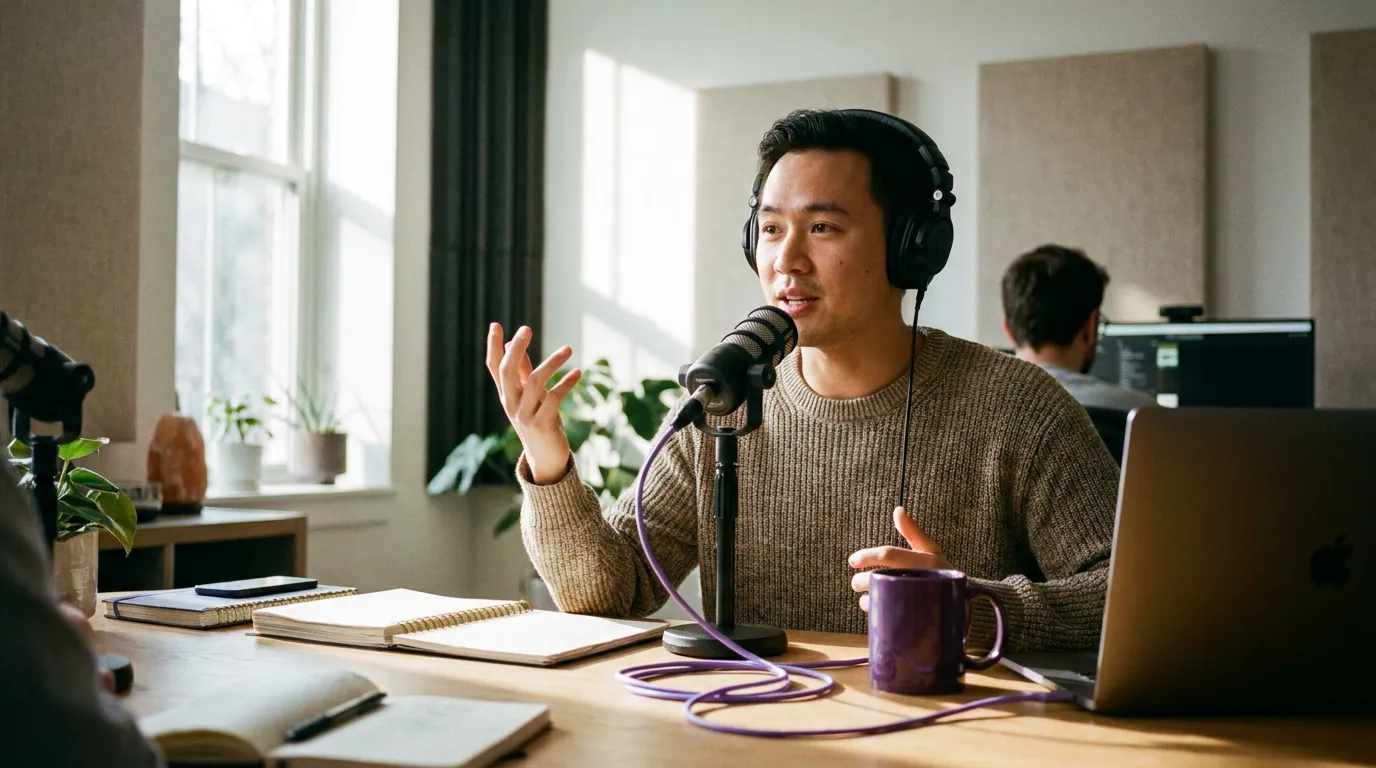
Field 1: Write the promise in one sentence
The promise is the one thing a listener gets every episode, stated so plainly they could repeat it to a friend. Use this template: "This show helps [one specific listener] do or feel [one specific thing], every episode." A show with a sharp promise survives because the host always knows what an episode is supposed to deliver, and the listener always knows why they pressed play.
Vague promises are where shows rot. "A podcast about marketing" promises nothing, there's no reason to subscribe over the other thousand marketing shows. "Helps freelance designers price their work without underselling, in 20 minutes a week" promises something a specific person can't get elsewhere. The narrower the promise, the easier every later decision becomes: what to record, what to cut, who to invite.
If you're stuck here, the problem is usually upstream, you haven't narrowed the topic enough. Work through how to choose a podcast topic and niche first, then come back and write the promise. The promise is the niche made specific.
Field 2: Name one listener, not "everyone"
Pick one real, specific person your show is for and write them down, their situation, what frustrates them, what they want. "Everyone" is the enemy of a good show because content made for everyone lands with no one. When you make every episode for a single named listener, your tone, examples, and topic choices all sharpen automatically.
This is the field people resist most, because narrowing feels like shrinking the audience. It does the opposite. The freelance-designer show above will be shared by thousands of freelance designers precisely because it's unmistakably for them. A vague "creative business" show gets ignored by all of them. Specificity is what makes a recommendation possible, and 57% of listeners say they rely on social media for podcast recommendations (InsideRadio, 2025), which only happens when a listener can instantly tell who a show is for.
Write a name. Write their job, their stuck point, and the thing they'd tell a friend after a good episode. You'll record differently the moment that person exists on paper.

Field 3: Choose a format you can actually sustain
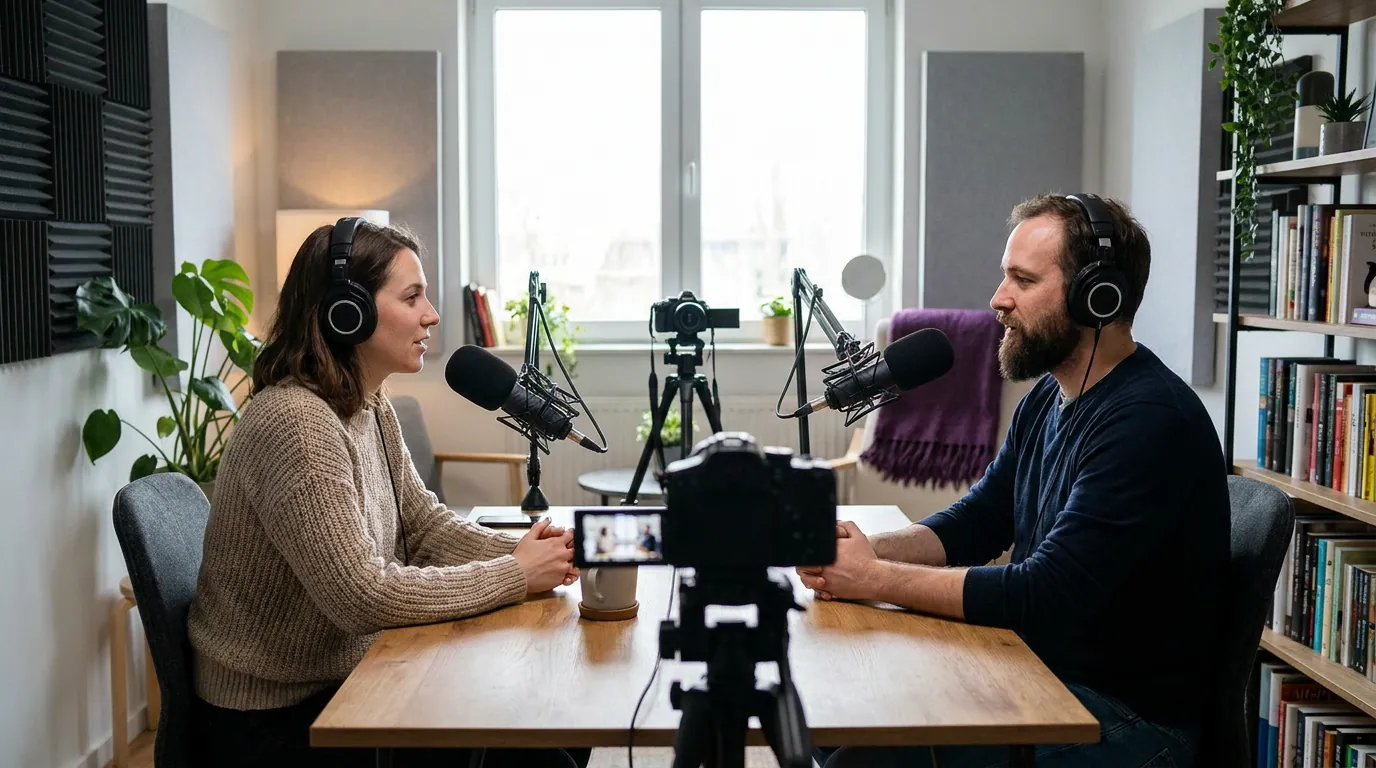
Pick the format, solo, co-host, or interview, and the length and cadence you can hold for a year, not the one that sounds impressive. Format is a stamina decision before it's a creative one. A weekly 45-minute interview show means booking, prepping, and editing a guest every seven days; if that's unrealistic, the show will quietly die, and the plan should catch that now.
Be honest about your real capacity. Solo shows demand the most writing discipline but no scheduling; interviews demand the least solo prep but constant guest logistics; co-hosting splits the load but needs two reliable humans. There's no best format, only the one you'll still be doing at episode 30, work through solo, co-host, or interview as your core format against your honest weekly hours.
Set a target length you can defend, too. A tight, consistent 25 minutes beats a sprawling 60 that drifts; pick a number from how long a podcast episode should really be and write it on the worksheet so episode one isn't a guess.
Field 4: Outline episode zero before you commit
Sketch one real episode start to finish, cold open, intro, the body in your chosen format, one call to action, outro, as a rough segment map with rough timings. This is the field that proves the concept actually produces an episode and isn't just a nice idea. Plenty of "great show concepts" collapse the moment you try to map 20 minutes of actual content onto them.
Keep it loose. You're testing structure, not writing a script. If you can block out the segments and roughly time them, the format holds. If you get to minute eight and have nothing left, that's the concept telling you it's a single good episode, not a series, better to learn that on paper than at the mic. When you do record, this same outline becomes your runsheet, and the next step is a low-stakes test recording: see why three private pilot episodes beat launching to learn.
Field 5: The survival test, list 20 episodes
Before recording, list 20 episode titles your concept could produce. Not polished, just 20 lines proving the show has a deep enough well. If you grind to a halt at eight, the concept is too narrow or too dependent on one idea, and you'll feel that wall around episode three. Twenty easy ideas means the show has runway.
This test is the closest thing to an early warning you'll get. Most podfade traces back to a host who simply runs out of things to say or runs out of motivation to keep producing (demandsage, 2025), and you can't stay consistent if the well is dry by episode four. Twenty ideas on paper is runway you can see before you've spent a dollar.
Common mistakes when planning a podcast
- Buying gear before writing the promise. A microphone never fixed a vague concept. Fix: fill the worksheet first; the budget mic under $100 decision can wait until the concept is sharp.
- Making it for "everyone." The broadest possible audience is the one nobody recommends. Fix: name one listener and write every episode to them.
- A promise no one can repeat. "A show about life and stuff" gives a listener no reason to subscribe. Fix: run the promise formula until a stranger can say it back.
- Skipping the 20-idea test. Great single ideas masquerade as shows all the time. Fix: list 20 episodes before you record; stall at eight and rework the concept.
- Over-planning instead of recording. A 40-page bible is procrastination in a binder. Fix: one page, then go test it. Reps teach faster than rehearsal.
FAQ
How long should it take to plan a podcast? About an hour for the worksheet, then a few days of letting the 20-episode list grow in the background. Concept planning is meant to be fast and decisive, not a months-long project. If you're still planning after two weeks without recording a test, you're using planning to avoid starting, fill the page and go record episode zero.
Do I need to plan if I just want a casual show? Yes, even more so. Casual shows are the most likely to fade because nothing anchors them when motivation dips. A one-line promise and 20 episode ideas give a casual show the spine it needs to clear episode three, which is exactly where casual shows tend to stop Amplifi Media2025).
Should I plan the whole first season before recording? No, plan the concept first, then one episode. A full season plan is a separate, later step that's much easier once the concept is proven. Pin the promise, listener, format, and one outline; record a test; then expand into a season once you know the format holds.
What's the difference between planning and just starting? Planning is the one page; starting is everything after. The worksheet isn't a substitute for recording, it's what makes the recording worth keeping. You can start a podcast for next to nothing once the concept is clear; here's how to start a podcast for free once your worksheet is done.