
A 5-Minute Vocal Warm-Up to Do Before You Record

Run four timed exercises in the five minutes before recording: 90 seconds of lip trills with slow breaths, 90 seconds of humming glides, 60 seconds of articulation drills, then a 60-second volume ramp to your speaking level. That order loosens the breath, wakes the tone, sharpens consonants, and finds your level, so your first sentence lands as well as your fortieth.
Most guests skip this because they don't think they have the time. You almost always do. There's a dead patch between joining the call and the host pressing record, small talk, mic checks, "can everyone hear me okay", and that window is usually four to six minutes. This routine is built to fit it, silently if you mute, so you walk into the first question already warm instead of warming up on tape.
Why warm up before a podcast at all?
Because the first few minutes of a cold voice are the worst few minutes you'll record, and they're often the part that gets clipped. A cold voice sits thin and high, runs out of breath mid-sentence, and mumbles the consonants that carry meaning. You can't fix that in the edit. You fix it before the record light by spending the breath, resonance, and articulation you'd otherwise burn through live on tape.
This matters more on a video podcast than it used to, for a simple reason: short clips are now how people find shows. 57% of listeners rely on social media for podcast recommendations, the first time that source has passed friends and family (54%) (Coleman Insights & Amplifi Media, via InsideRadio), and 53% of new US weekly listeners now say they'd rather watch a podcast than only listen (Backlinko). The clip that travels is usually a sharp 30-to-60-second moment. If your voice is still cold when the host asks the opening question, the most-shared version of you is your worst version.
A warm-up doesn't change your voice. It gets the voice you already have online before the conversation starts costing you.
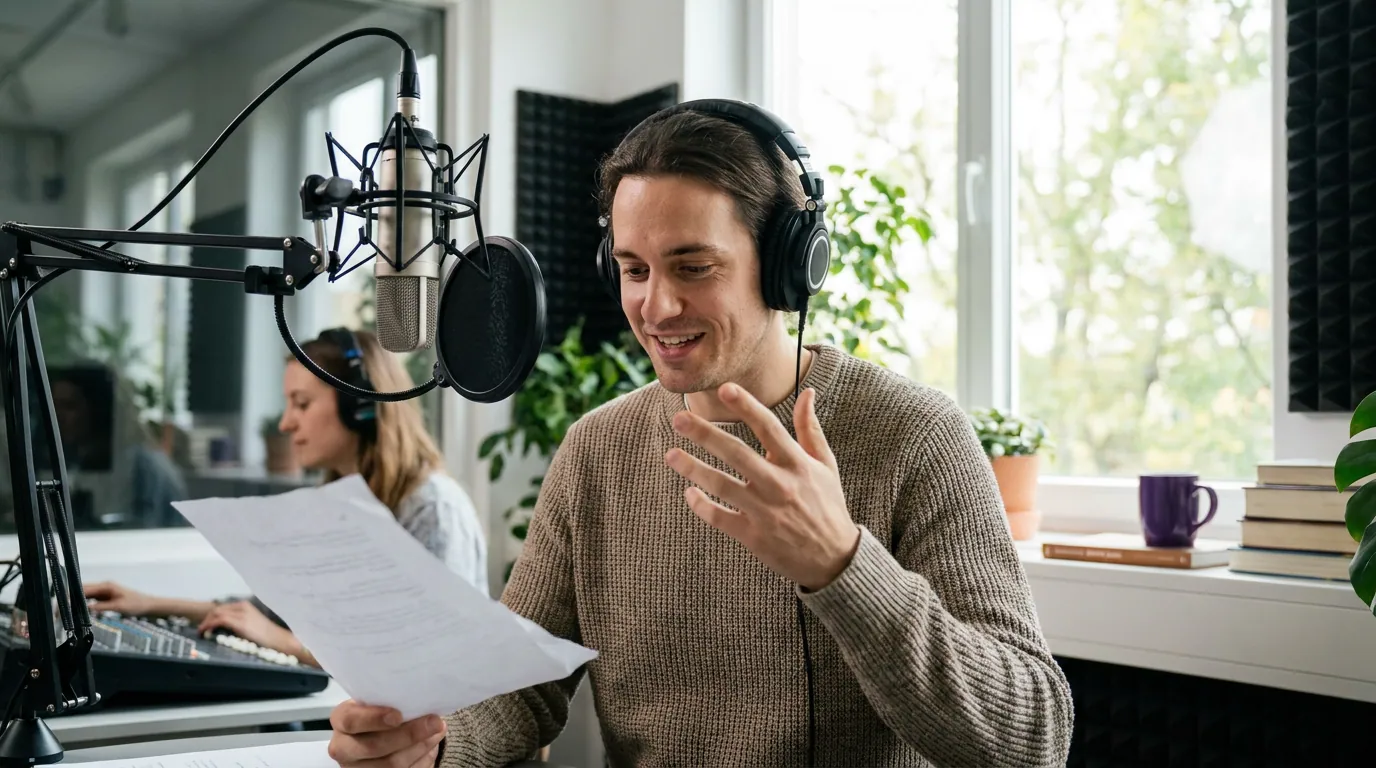
The 5-minute routine, step by step
Do these in order, the sequence is deliberate. Breath first, because everything sits on it. Resonance second, to wake the tone. Articulation third, to sharpen the edges. Level last, so you finish at exactly the volume you'll start the episode on. Total time: five minutes. If you only have three, the timings below tell you what to keep.
1. Lip trills + slow breathing, 90 seconds
Press your lips loosely together and blow air through so they buzz, like a small motorboat sound. Sustain it on one breath, then add a low-to-high pitch slide as you trill. Between trills, breathe low into your belly, slow in for four counts, slow out for six. The trill is doing two jobs: it keeps your throat relaxed while you work the pitch range, and it forces steady airflow, which is the foundation of a voice that doesn't run thin. If you're muted on the call, nobody hears a thing.
2. Humming glides, 90 seconds
Close your mouth and hum a gentle low note, then glide up to a comfortable high note and back down, like a slow siren. Do five or six passes. Aim to feel the buzz move forward into your lips and the front of your face rather than staying stuck in your throat. That forward buzz is resonance, it's what makes a voice sound full and present on a mic instead of flat and far away. Keep it soft; you're waking the voice, not performing.
3. Articulation drills, 60 seconds
Say a few tongue-twisters slowly and over-crisply, exaggerating every consonant: "red leather, yellow leather," "unique New York," "the lips, the teeth, the tip of the tongue." Speed up only once each one is clean. This wakes the muscles that shape consonants, the exact ones that go lazy when you're cold and turn into the mumbled, swallowed word endings a listener has to strain past. Over-articulating now means you land at normal-crisp when you talk.
4. Volume ramp, 60 seconds
Pick one sentence, your name and what you do works well. Say it at a near-whisper, then a notch louder, then again, climbing in four or five steps until you reach your natural speaking volume. Stop there. The point is to arrive at the exact level you'll use on the first question, so you're not too quiet (the host rides your gain up and catches room noise) or too loud (you clip and bark the opener). Ending on your real level is why this step goes last.
What each exercise actually fixes
The routine isn't four random exercises. Each one targets a specific way a cold voice fails on mic. If you're short on time, this tells you which block to keep based on the problem you actually have.
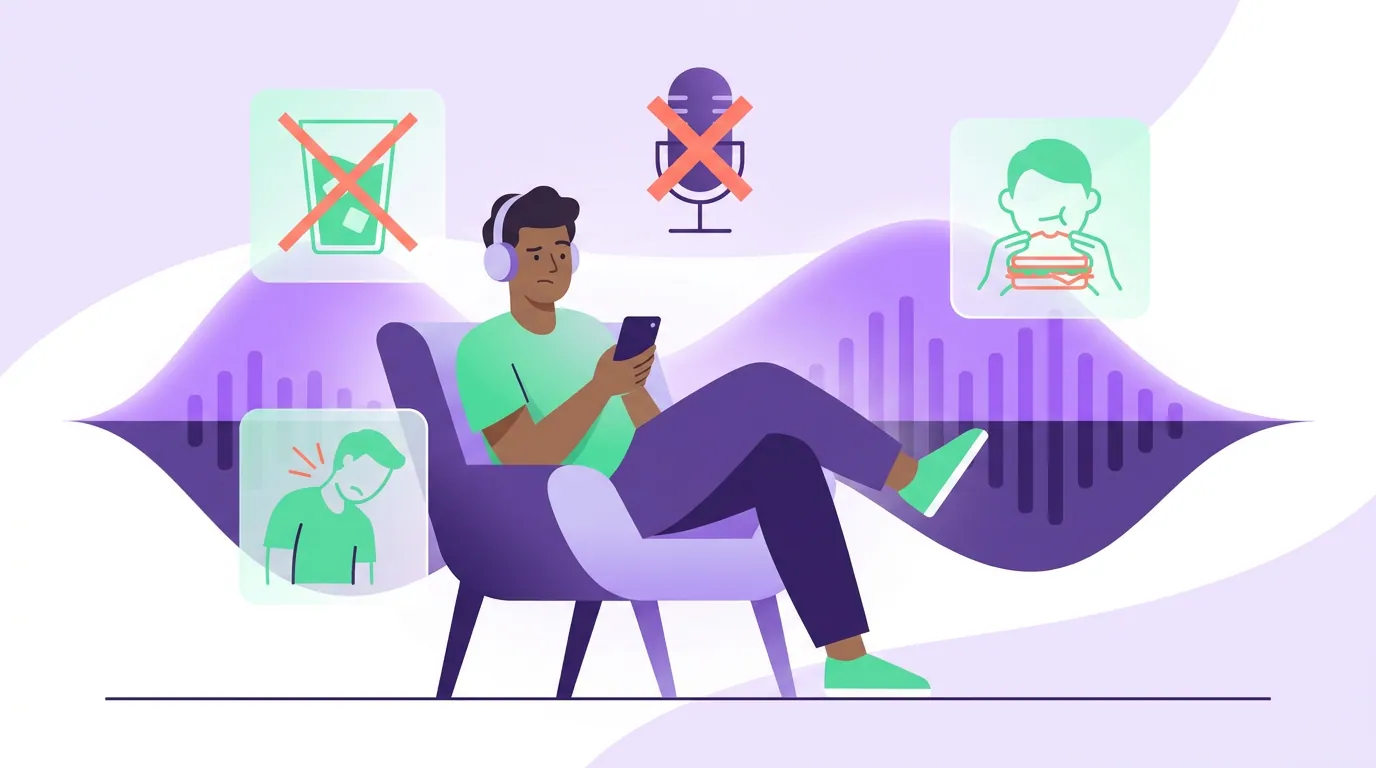
Common mistakes that waste the warm-up
The routine is simple. The ways people undo it are predictable.
- Warming up loud on an unmuted call. Lip trills and "unique New York" at full volume while the host is finishing their coffee is a great way to seem nervous. Mute yourself, or do the silent versions, trills and gentle hums carry barely past your own desk. Save the volume ramp for the last 30 seconds when mic checks are happening anyway.
- Skipping the breath and jumping to the tongue-twisters. Articulation on top of shallow, cold breathing just gives you crisp consonants on a thin voice. The order matters. Breath holds the whole thing up; do block 1 even when you cut everything else.
- Pushing the high notes. A warm-up is not a workout. If the humming glide hurts or strains, you're going too high or too hard. Stay in a comfortable middle range. Straining your voice five minutes before two hours of talking is the opposite of useful.
- Ending the volume ramp too loud. People get momentum and overshoot, then open the episode barking. Stop the ramp the instant you hit normal conversational level, that's the whole point of doing it last.
- Treating it as a one-time thing. A warm voice cools down. If there's a long delay before recording, or a break mid-session, run the 60-second short version (block 1 + block 4) again before you go back on.
When there's genuinely no time
If the host says "great, recording now" the moment you join, you still have options. Take three slow belly breaths, in for four, out for six, while they read the intro. Hum quietly through closed lips for ten seconds. Then say your own name and one sentence out loud at speaking volume before the first question reaches you, even if it's just "thanks for having me." That last bit is a one-rep version of the volume ramp, and it stops your very first words from being your coldest. It's not the full routine, but it beats opening cold.
How the warm-up fits the rest of your on-mic game
A warm voice is the foundation, not the whole performance. Once you sound present, the next gains come from delivery. If you tend to rush, the warm-up's slow breathing also helps you fix talking too fast on a podcast. A relaxed throat and steady airflow make it easier to cut the ums and likes when you're being interviewed, because filler often fills the gap left by panicked breathing.
On a video podcast, your voice and your face are graded together. Pair this with looking confident on camera as a first-time guest and knowing where to look, the camera or the host's face. And the warm-up is itself good manners: arriving ready respects the host's time, which is squarely in the unwritten rules of podcast guest etiquette, the same reasons a host works to make guests feel comfortable on mic.
FAQ
How long before recording should I warm up my voice?
Start about five minutes before the host hits record, and finish right as recording begins so your voice is warm and at level when the first question lands. If your warm voice cools during a long pre-show chat or a mid-session break, run the 60-second short version, belly breaths plus the volume ramp, again before you go back on.
Can I warm up my voice silently if I'm on a call?
Yes. Lip trills, gentle humming, and slow belly breathing are all quiet enough to do muted, and they cover breath and resonance, the two most important blocks. Save the louder articulation drills and the volume ramp for the last minute, when mic checks are happening, or do them before you join the call.
What's the single most useful exercise if I only have one minute?
Slow belly breathing into a short volume ramp. Three slow breaths, in for four counts, out for six, then say one sentence climbing from quiet to your normal speaking level. That hits the two things that wreck a cold opener: shallow breath and the wrong volume. It won't fully wake your resonance, but it stops your first answer from sounding gaspy and flat.
Does a vocal warm-up actually change how I sound on a clip?
It changes the opening minutes most, which is exactly the part most likely to get clipped. A warm voice has steadier breath, fuller tone, and crisper consonants, so a 30-to-60-second moment pulled from early in the episode holds up instead of sounding thin. It won't change your voice's character, it gets the voice you have working from the first word.
Will warming up help with nerves, not just sound?
It helps both. The slow exhale in the breathing step is a known calming signal for the body, and giving your hands and mouth a small task in the minutes before recording crowds out the spiral of pre-show nerves. You walk in having already heard your own warm, steady voice once, which makes the first real answer feel less like a cold jump.