
How to Build a Podcast Guest Media Kit (One-Sheet)

A podcast guest one-sheet is a single page a host can scan in fifteen seconds to decide whether you'll make a good episode. Six fields do the work: a headshot, a 40-to-60 word bio, three to five suggested topics, two or three sample questions, one or two past appearances, and your links. Put the topics near the top, that's what hosts read first.
The "media kit" name oversells it. You do not need a designed PDF deck, a press logo wall, or a downloadable folder of assets. You need one clean page that answers the only question a host is asking: will my listeners get something out of this conversation? Below is each field, what to write in it, the order a host's eye actually travels, and the four things that send a one-sheet straight to the trash.
What is a podcast guest one-sheet?
A guest one-sheet (also called a guest media kit or speaker one-sheet) is a one-page document you attach or link in your pitch that tells a host who you are, what you can talk about, and why their audience will care. It exists to do one job: make saying yes easy. Everything that doesn't move a host toward booking you is clutter.
Think of it as the difference between a pitch email and a résumé. The email is the knock on the door. The one-sheet is what the host glances at while deciding whether to open it. It should be skimmable, specific, and built around the host's audience, not yours. A one-sheet that lists your awards is about you; one that lists episode angles is about them, and the second one books.
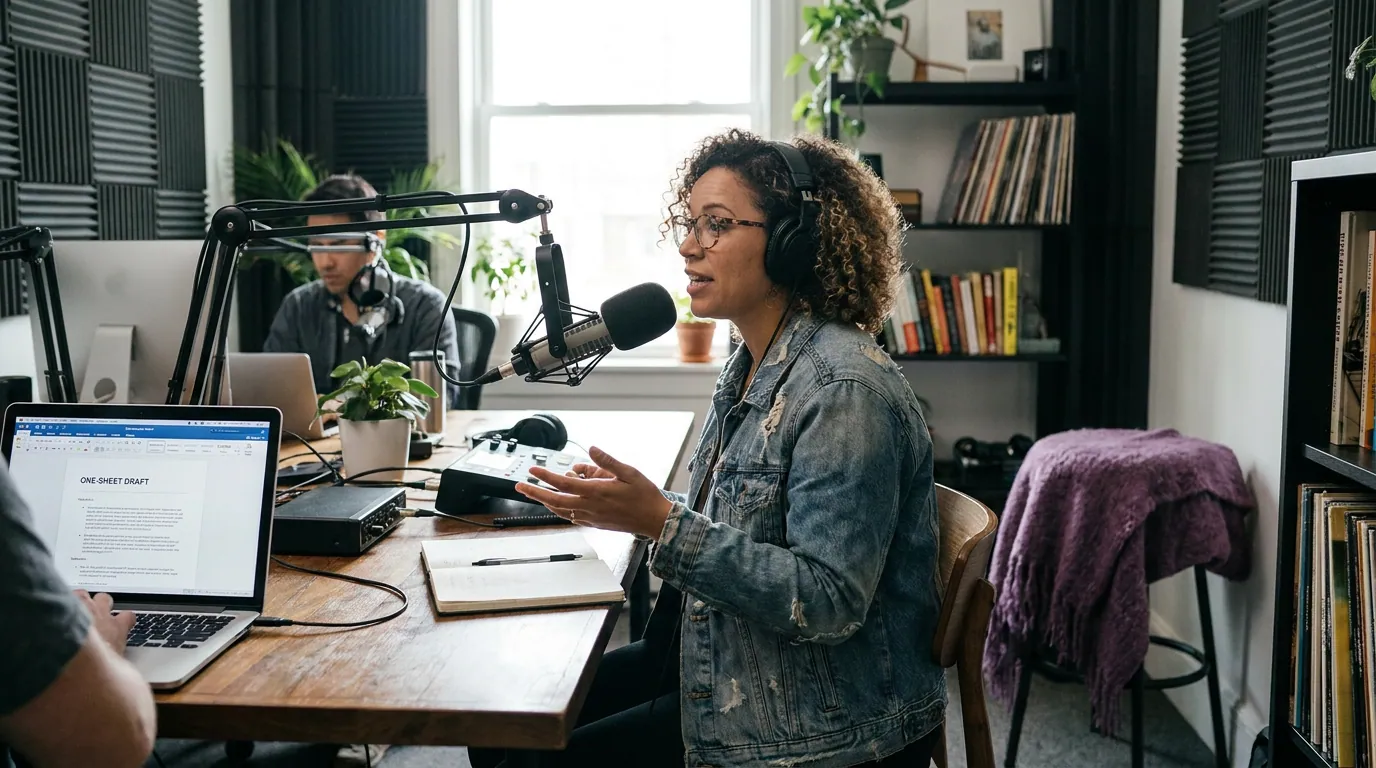
The six fields, one at a time
1. Headshot
One recent photo, shot from the chest up, well-lit, looking at or near the camera. For a video show, the host is casting a face that holds attention on a thumbnail, so a flat passport photo or a cropped group shot reads as careless. You don't need a studio session, daylight from a window and a phone is enough. Name the file like a professional (firstname-lastname-headshot.jpg), not IMG_4471.
2. Bio, 40 to 60 words, in third person
Write the bio the way you'd want a host to read your name on air. One credential the listener can't argue with, one line of personality, and that's it. Third person, because hosts copy it into show notes verbatim. If your bio runs four sentences and three job titles, cut it in half. The longest bio is almost never the one that gets you booked, it's the one a host skims past to reach the part that matters.
3. Suggested topics, three to five episode angles
This is the field that earns the booking, so spend the most time here. Don't list your areas of expertise ("leadership, productivity, mindset"). List episode angles a host could read and immediately picture: "Why your best employees quit in month nine, not month one." "The two-question hiring filter I use instead of a résumé." Each one is a ready-made episode title. You're not telling the host what you know; you're handing them a show.
4. Sample questions, two or three the host could ask cold
Give the host two or three questions they could read straight off your page and get a good answer to. This does two things: it shows you can carry a conversation, and it lowers the host's prep cost to nearly zero. Make them open and a little provocative, "What's the advice in your field that's quietly wrong?" beats "Can you tell us about your background?" Don't write a script; write the on-ramps.
5. Past appearances, one or two, linked
A host's biggest unspoken fear is booking a guest who's brilliant in writing and dead air on mic. Two linked past appearances kill that fear faster than any credential. If you've never guested, link a talk, a webinar, a panel, or even a short clip of yourself speaking to camera, anything that proves you're comfortable out loud. No audio anywhere? Record a two-minute answer to one of your own sample questions and link that. Proof of voice beats proof of résumé every time.
6. Contact and links, kept short
Email, your site, and the one social handle actually worth a click. Not all six platforms. A host who has to choose among six links usually clicks none. If you want listeners to find your own show afterward, link the show, not a tree of profiles. Make the path from "good episode" to "subscribed to your thing" as short as the path from URL to clip.
What hosts skim first (and in what order)
Hosts do not read a one-sheet top to bottom. They triage it. In practice the eye goes to the suggested topics first, that's the "is this an episode?" check, then jumps to the headshot for a fast video-fit read, then the bio for credibility, then past appearances to confirm you can talk. Sample questions and links get read only if the first four passed. Build the page in that priority order, even if it sits on the page in the layout above.
This is why a topics section buried under three paragraphs of bio fails: the host never reaches the one field that decides it. Put the angles where the eye lands.
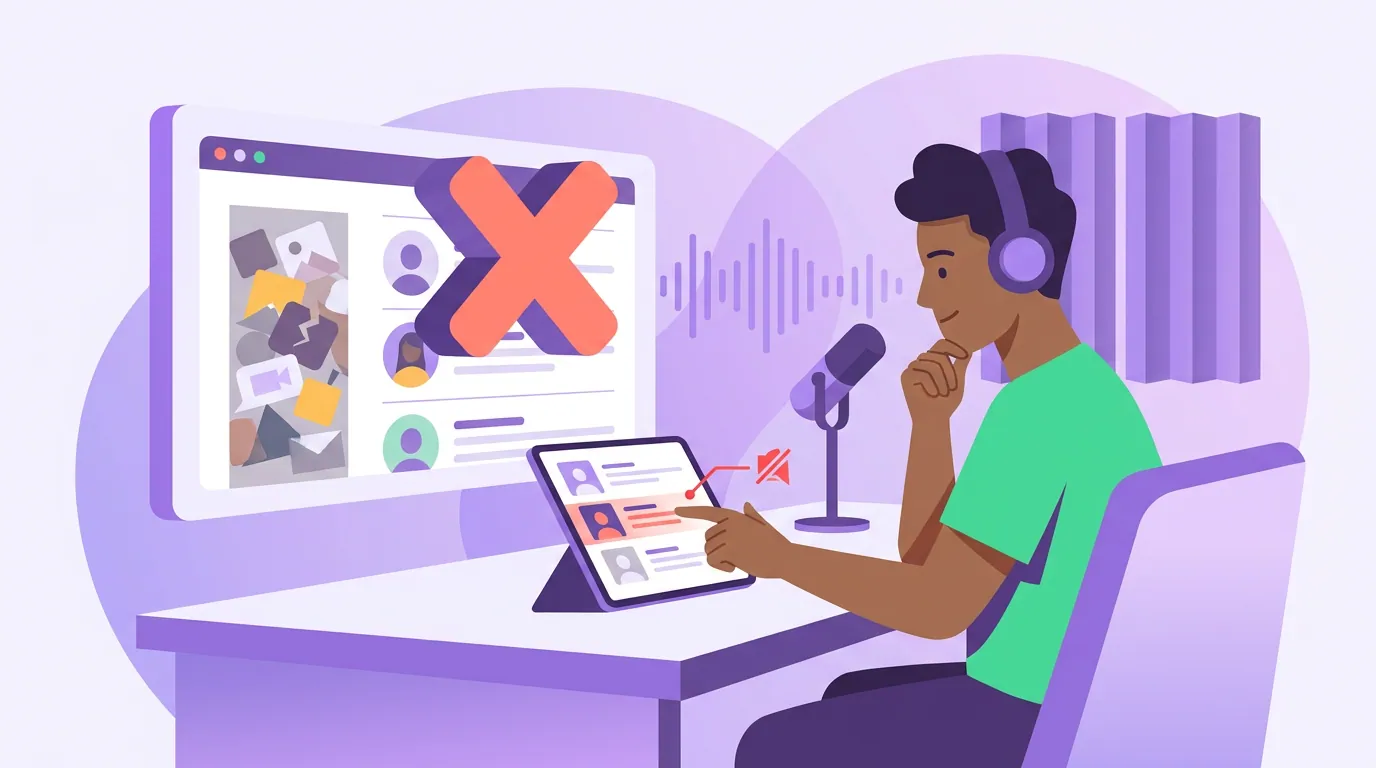
What makes a host hit delete
The fastest way to learn what works is to look at what gets one-sheets deleted unread. Four traits do most of the damage, and all four are easy to avoid.
It's about you, not their listeners. A one-sheet that opens with your achievements answers a question the host didn't ask. Lead with what their audience gets.
The bio is a résumé. Three job titles and a list of clients makes the host work to find the one relevant fact. Cut to a single sharp credential plus a human line.
There's no proof you're good on mic. Smart on paper and stiff on camera is a real risk, and hosts have been burned. One linked clip removes the doubt. No clip, no easy yes.
It's a heavy deck instead of a page. A four-page PDF with a logo wall signals you've optimized for looking professional over being useful. Hosts book the page they can read at a stoplight. Keep it to one.
Most of these come down to the same instinct that runs through good podcast guest etiquette: make the other person's job easier than they expected.
Where the one-sheet fits in the booking process
The one-sheet doesn't work alone. It's the attachment to a pitch, and the pitch only lands if it reaches a real person. The sequence is: find shows that fit your topic, find the host's actual email, send a short specific pitch, and link the one-sheet so the host can confirm what the pitch promised.
If you're earlier in that process, start with how to get booked on podcasts as a guest for the full path, how to find podcasts that will actually book you for targeting, and how to find a podcast host's real email address so your pitch doesn't die in a generic inbox. When you're ready to write the message the one-sheet attaches to, the guest pitch email that gets replies covers the wording.
One quiet payoff worth knowing: appearing as a guest is itself a discovery channel. Social clips now drive podcast discovery more than friends and family do, 57% of listeners now rely on social media for recommendations versus 54% for friends and family, the first time social passed personal tips (InsideRadio, 2025). A short clip of your best moment on someone else's show is one of the cheapest ways to send their listeners back toward yours.
Frequently asked questions
What should a podcast guest media kit include? Six fields on one page: a recent headshot, a 40-to-60 word third-person bio, three to five suggested topics framed as episode angles, two or three sample questions, one or two linked past appearances, and short contact details with the one or two links worth a click. Put the suggested topics near the top, it's the field hosts read first.
Do I need a designed PDF, or is a simple page fine? A simple, clean page is fine and usually better. Hosts triage one-sheets in seconds and book the one they can read at a glance, not the most designed deck. A four-page PDF with a logo wall signals you optimized for looking impressive over being useful. One scannable page, even a shared doc link, outperforms a heavy file.
What if I've never been a guest before? Link any proof you can speak on mic: a talk, a webinar, a panel, a YouTube video, or a short clip of yourself answering one of your own sample questions to camera. Hosts' real worry is that a guest who's sharp in writing will be flat out loud. Two minutes of clear audio or video removes that doubt better than any credential.
How long should the bio on a one-sheet be? Forty to sixty words, in third person, because hosts copy it into show notes word for word. Include one credential the listener can't argue with and one line of personality. Cut the second and third job titles. A short, specific bio gets read; a long one gets skimmed past on the way to the part that matters.
How many topics should I suggest? Three to five, each written as a concrete episode angle rather than a broad area of expertise. "Why your best employees quit in month nine" is an episode; "leadership and culture" is a category the host has to turn into one themselves. The easier you make it to picture the conversation, the faster the yes.