
Podcast Follow-Up Questions: Five Triggers to Dig

A good follow-up question is built from the exact word the guest just said, not from your list. The reflex is two parts: hear the phrase that signals there's more underneath, then pick the right kind of follow-up, one that clarifies, one that deepens, or one that pushes back. Prepared questions open a topic. The follow-up is what actually opens the guest.
You can't script this. A list of questions makes you a worse interviewer the moment you start reading it, because reading means you've stopped listening. What you can train is the trigger: a handful of phrases that, when a guest uses them, mean stop, do not advance, dig here. Below are the five that fire most reliably, the three follow-up types and how to choose between them in the half-second you have, and the mistakes that flatten a follow-up before it lands.
What is a follow-up question in a podcast interview?
A follow-up question is the unscripted second question you ask because of what the guest just said, not the next item on your prep sheet. Its only source is their last answer. A prepared question is a door; the follow-up is you stepping through it instead of walking to the next one. The whole craft lives in that move.
The reason it matters is that first answers are rarely the real ones. People give the rehearsed, public version first, the version they've said on three other shows. The follow-up, asked from genuine attention, is what gets past the press-release answer to the thing they haven't said out loud before. That unguarded second answer is almost always the most quotable moment in the episode, and increasingly it's the moment that travels: 57% of listeners now rely on social media for podcast recommendations, the first time that source passed friends and family (InsideRadio). The clip that does that work is usually a follow-up exchange, not a prepared answer.
The five trigger phrases that mean "dig here"
Stop trying to listen to everything. Train your ear for five specific signals instead. Each one is a guest unconsciously flagging that there's more under the surface, and each one is your cue to drop the script and ask one more question.
- "Honestly" or "to be honest." People say this right before they drop the corporate answer and tell you what they actually think. Don't interrupt it. Let them finish, then ask, "What stopped you from saying that earlier?"
- "I've never told anyone this." The rarest and richest signal. They've just volunteered to go somewhere private. Don't pounce. Slow your voice down and ask one quiet, specific question, then leave silence for them to fill.
- "It's complicated." This is a story folded into two words to save you time. Unfold it: "Walk me through the complicated part, where did it start going sideways?" Nine times out of ten that's the most human moment in the episode.
- A hedge, "sort of," "kind of," "I guess," "I mean." A hedge marks a thing they're not sure they're allowed to say. Lower the stakes so they can: "You said 'sort of', what's the version you'd say if no one was listening?"
- A flat number with no feeling attached. "We lost about $400,000." Said plainly, that's a stat. Behind it is a week they'll never forget. Trade the number for the moment: "What was the morning you found that out like?"
The three kinds of follow-up, and which to reach for
Most interviewers only have one follow-up in their hands: "Tell me more." It works, but it's blunt, and a guest can hear that you're stalling. There are three distinct moves, each doing a different job. Knowing which one a moment calls for is the difference between a follow-up that opens the guest and one that just fills air.
Clarifying follow-ups make sure you, and the listener, actually understood. Use one when a guest drops a name, a term of art, or a logical leap that went by too fast: "When you say 'the pivot,' which pivot do you mean?" These cost almost nothing and they protect the listener, who can't raise a hand. The trap is using only these: an interview made entirely of clarifications never gets below the surface.
Deepening follow-ups are your workhorse, and the right answer to every trigger phrase above. They take a surface answer and ask for the layer beneath it: feeling, motive, the specific moment. "What did that actually feel like?" "What was going through your head right then?" "Where did you first realize it wasn't working?" If you only learn one follow-up type, learn this one.
Challenging follow-ups respectfully press a claim the guest stated as settled. "Some people would push back on that, what would you say to them?" Done well, this is generous: it gives the guest a chance to defend the strongest version of their idea, and it makes the exchange honest instead of fawning. Done badly, it's a gotcha. The rule: only challenge after you've built rapport, never to score a point, and always give them room to answer fully. A challenging follow-up also lands better when the question itself is clean, see the four question shapes that quietly kill answers.
How to choose the right follow-up in the half-second you have
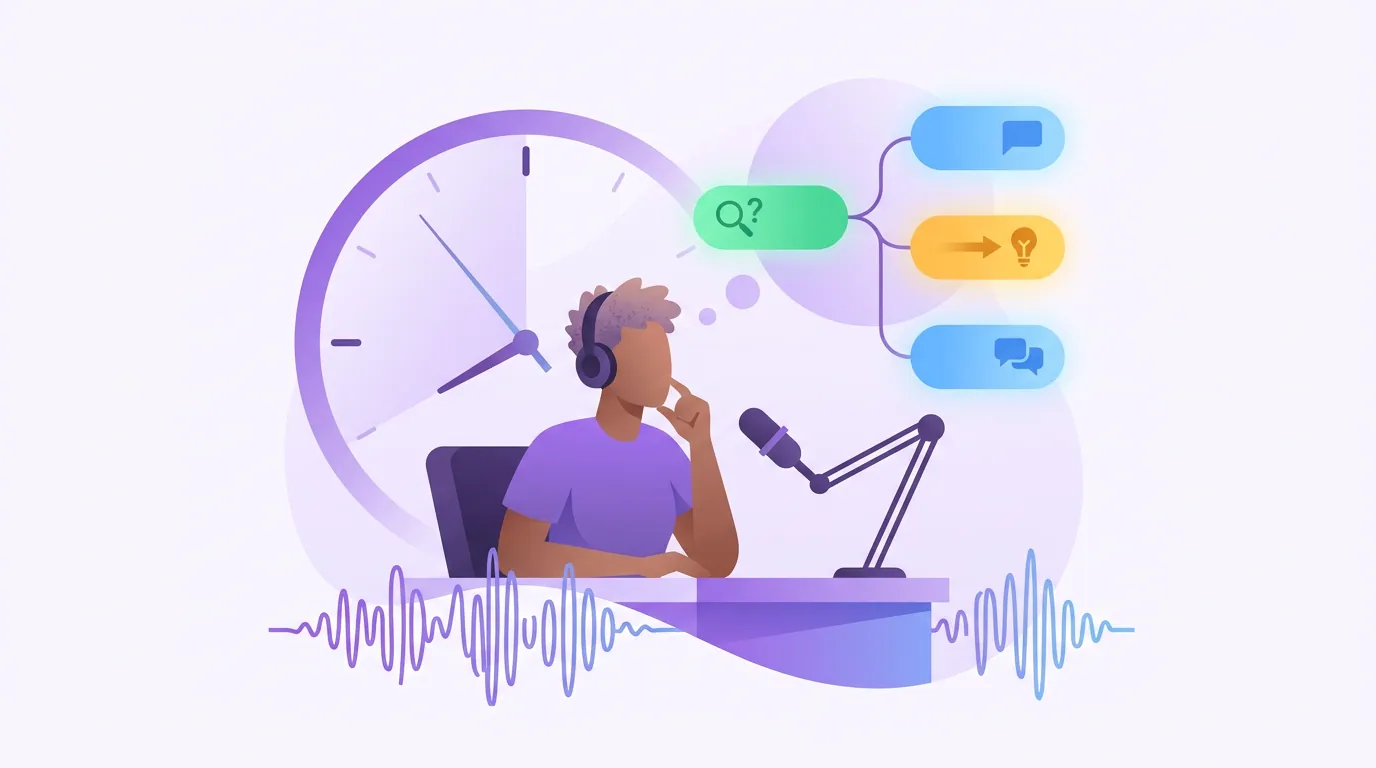
You don't have time to think this through on mic, so reduce it to one decision rule: clarify only when you're confused, challenge only when you've earned it, deepen by default. When a trigger fires and you're unsure, ask the deepening follow-up. It's almost never wrong, and it's the one that produces the moments worth keeping.
The mechanical version is even simpler. Catch the most charged word in their last sentence, the one carrying the most feeling or surprise, and put it back into your question: "You said it fell apart, what fell apart first?" Using their own word proves you were listening and gives them an exact thing to answer. The best follow-ups built this way are often four or five words long. This is the same muscle as building your next question from the guest's last sentence, the follow-up is just that habit, fired on a trigger.
Common mistakes that kill a follow-up
The reflex fails in predictable ways. These five are the ones I see most when coaching hosts, each with the fix.
- Stacking the follow-up onto a new question. You ask the deepening follow-up, then immediately bolt on "and also, what about…?" The guest answers the second half and the real moment evaporates. Ask one thing. Then wait.
- Filling the silence yourself. A guest pauses after a hard question and most hosts panic and rescue them with a softer one. The pause is them deciding to be honest. Count to three in your head before you say anything.
- Following up on the wrong word. You latch onto a fact when the feeling was the story, or vice versa. The charged word is usually the one they slowed down on or hedged around, not the one that's easiest to ask about.
- Reading the next scripted question anyway. The single most common failure. They said something extraordinary and you advanced to question seven because it was written down. If you over-prepared, you'll do this. Bring fewer questions; see the day-of prep checklist for how light to travel.
- Challenging before you've earned it. Pressing a guest in the first five minutes reads as an ambush and shuts them down for the rest of the hour. Build rapport first, then challenge, and only on ideas, never on the person.
A note for guests, not just hosts: the same map works in reverse. If you can hear a host miss a follow-up, you can offer the deeper answer unprompted, "the honest version is…", and hand them the moment they didn't know to ask for. Good guests do half the host's job, which is part of why hosts rebook them; more on that in the etiquette rules hosts wish guests knew and how a host can make a guest comfortable enough to go there.
Frequently asked questions
What is a follow-up question in an interview? A follow-up is the unscripted second question you ask because of what the guest just said, not the next item on your list. Its only source is their last answer. First answers tend to be rehearsed; the follow-up is what gets past the polished version to the real one underneath.
How do you ask good follow-up questions in a podcast interview? Listen for a trigger, "honestly," "it's complicated," a hedge like "sort of," or a flat number, then ask a deepening question built from their exact word: "You said it fell apart, what fell apart first?" Ask one thing, leave silence, and reach for the deepening follow-up by default.
What are probing questions in an interview? Probing questions dig beneath a surface answer to reach motive, feeling, or specifics. In practice they're the deepening follow-up: "What did that actually feel like?" or "Where did you first realize it wasn't working?" They work best when phrased with the guest's own word and followed by a deliberate pause.
How many questions should I prepare if I'm relying on follow-ups? Bring roughly eight to twelve strong open questions for a 45-minute interview and treat them as a map, not a script. Over-prepare and you'll read your list instead of listening, which kills the follow-ups. Light prep leaves room to chase the answer where it actually goes; research the guest well so you know which doors are worth opening.
When should I challenge a guest's answer instead of just deepening it? Challenge only after rapport is built, only on an idea they stated as settled, and never as a gotcha. Frame it as an invitation, "some people would push back on that, what's your answer?", which lets them defend the strongest version of their point. Most of the interview should be clarifying and deepening, not challenging.