
What To Do When a Clip Goes Viral: 48-Hour Playbook


When a clip takes off, you have roughly 48 hours of borrowed attention, and the goal is to convert it into followers before it fades. Pin the clip, reply to the top comments fast to drive profile taps, ship a follow-up clip while attention is high, and make sure your bio, link, and a clear next step are in place for the strangers now landing on your profile. Do that and the spike leaves followers behind instead of a flat line.
A breakout clip is not the win. It's a window. The platform is handing you reach it normally rations, and that boost decays, most short-form spikes are mostly spent within two or three days. What you do inside that window decides whether the spike compounds into an audience or evaporates as a number you screenshot. Below is the move-by-move playbook for those hours, in the order they actually pay off.
Why the 48 hours matter more than the clip
A view is the cheapest thing a platform sells, and a spike is just a pile of cheap views unless you give the new arrivals somewhere to go. For video shows, one production house's client data puts clips at 20–40% of new audience with a 2–5x reach lift (Podcast Studio Glasgow), treat that as directional from a single source, not a platform-wide audit, and note it describes clips that convert attention, not clips that merely accumulate it. A breakout magnifies whatever conversion machinery you already have. If that machinery is missing, the magnifier just shows more people a dead end. (How many clips per week you ship sets how often you get one of these windows.)
The trap has a name worth keeping in your head: the dead-cat bounce. The view line jumps, you feel great, and the follower line barely moves because nothing on the profile or in the post changed to catch the traffic. The clip went viral. Your show didn't grow.
The whole point of the next two days is to bend that grey line up.
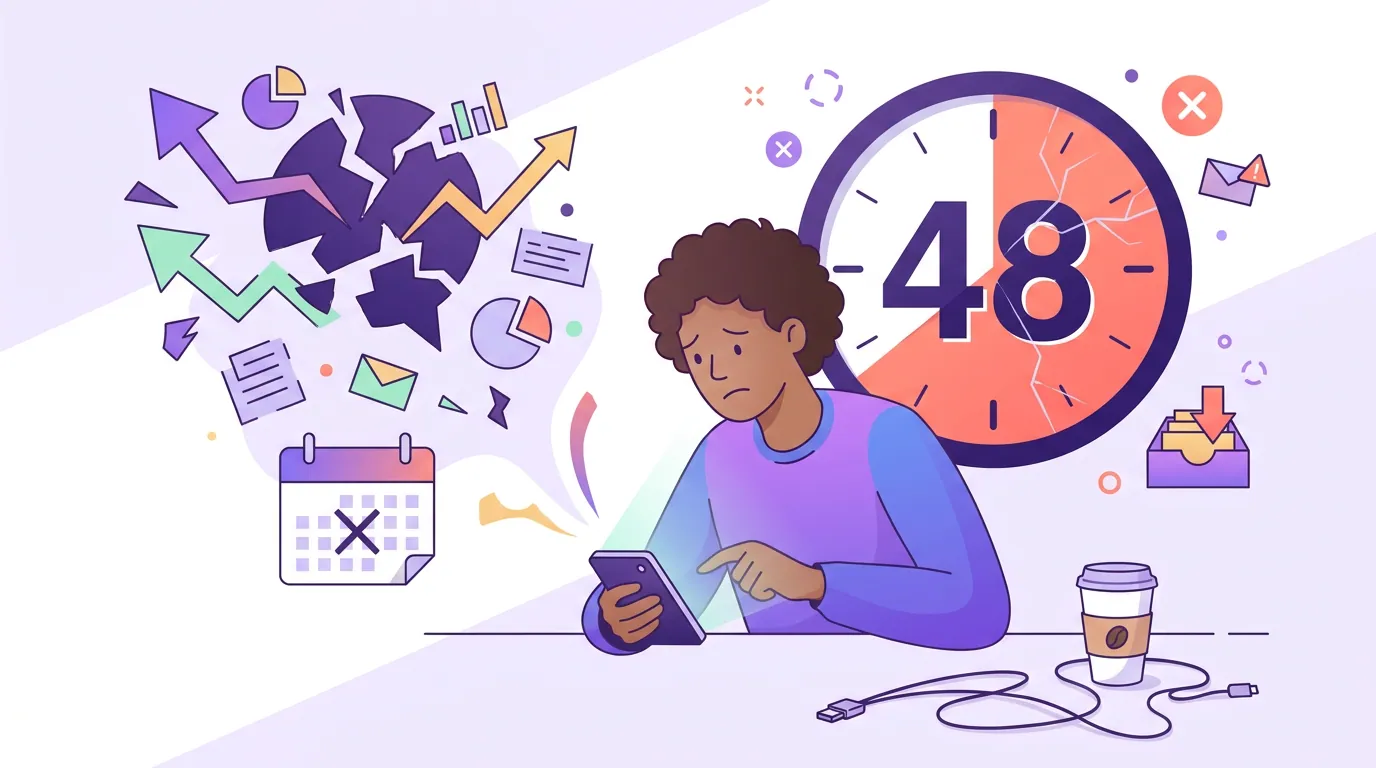
The 48-hour clock
Here are the seven moves, ordered by how soon they pay off and how fast they decay. The first three are urgent, do them while the clip is still climbing. The rest can stretch across the two days but should all land inside the window.
Move 1, Pin the breakout (first 30 minutes)
Pin the clip to the top of your profile grid and, where the platform allows, pin your own best comment to the post. New visitors arrive in a scroll. The first thing they should see is the thing that made them curious, not a three-week-old post. On a pinned comment, write one line that points home: the show name and what the full episode covers. This is free real estate that most creators leave empty.
Move 2, Fix the bio and the link (first 30 minutes)
Strangers are reading your bio right now to decide whether you're worth a follow. Make it answer one question, what do I get if I follow, in plain words, and make the link work. If your link goes to a dead Linktree or a homepage with no clear next step, you're losing the most curious people at the last step. Point it at the place you actually want them: the full episode, the YouTube channel, or a single email signup. One destination beats five.
Move 3, Reply fast, and reply to convert (first 2 hours, then ongoing)
Reply to the top comments while the clip is still climbing. Two reasons. First, early replies feed the engagement the algorithm is watching, which can extend the reach. Second, and this is the part people miss, a reply is a profile-tap engine. When you answer a comment with something useful, the person who wrote it and the people reading often tap through to see who you are. Profile taps are the bridge between a view and a follow, the exact signal that separates clips that convert from clips with vanity views. Answer questions, add the missing context, and where it fits, name the episode. Skip the generic "thanks!"
Move 4, Ship a follow-up clip the same day
This move pays off more than any other, and almost nobody makes it in time. The audience that liked the breakout is the warmest audience you'll have all month, and they're on your profile now. Give them a second clip from the same episode, ideally an adjacent moment or the line right before the one that hit. You already know the topic works; lower the risk and post a sibling. One vendor analysis links winning the first three seconds to roughly +65% engagement (castmagic), treat that as a directional figure, not a law, so open the follow-up on its own claim, not on "as I was saying in my last clip." Speed matters more than polish here; a same-day follow-up beats a perfect one next week. (Picking which suggested moment to post is still your call.)
Move 5, Add one CTA, not five
Pick a single next step and put it everywhere the new traffic touches: the pinned comment, the caption, and the last two seconds of the follow-up clip. "Full episode on [show name]" or "Weekly clips, follow for more." One ask. Stacking three CTAs splits attention and converts worse than one clear line. If you're not sure which to use, default to "follow for more," because the follow is the asset that lets the next clip reach these people for free.
Move 6, Post your next-best clip (day two)
By the second day the breakout is cooling, but your profile is still getting unusual traffic. Post your strongest unrelated clip, your previous best, or a fresh one. The job now shifts from riding the spike to proving you're worth following beyond one lucky hit. A visitor who sees two good clips, not one, has a real reason to follow. This is where a recurring, recognizable clip format earns its keep: it tells people what the next one will be like.
Move 7, Make your profile match the breakout (day two)
Look at your profile the way a stranger who just watched the breakout would. Does the grid deliver on what the clip promised? If the hit was a sharp business take and your top posts are off-topic, reorder so the first three clips a visitor sees match the vibe that brought them. You're not rebranding, you're making sure the first impression is consistent for 48 hours of unusual traffic.
Reactive vs. captured: the difference the playbook makes
The same spike produces wildly different follower outcomes depending on whether you ran the playbook. Here's the shape of it: a creator who only watches the numbers climb versus one who pins, replies, and ships a follow-up.
The view counts are identical. The follower gain isn't close. That gap, roughly an order of magnitude in follows-per-view, is what 48 hours of deliberate work buys you. The numbers are illustrative, modeled on the pattern rather than one measured account, but you can verify the direction on your own next breakout.
Common mistakes in the first 48 hours
- Treating the spike as the reward. Screenshotting the view count and moving on is the most common error. The view is borrowed; the follow is yours. Spend the window converting, not celebrating.
- Waiting until tomorrow to post the follow-up. By tomorrow the warm audience has scrolled on. A same-day follow-up while the breakout is still in feeds reaches them; a polished one next week reaches strangers again.
- Going quiet in the comments. Silence wastes the cheapest profile-tap source you'll ever get. Even ten thoughtful replies in the first two hours out-converts a hundred views you ignore.
- Sending traffic to a broken or vague link. A dead Linktree or a homepage with no clear next step loses the most motivated visitors at the final step. Check the link before you do anything else.
- Changing your whole format to chase the hit. One breakout is a signal, not a mandate. Reorder your grid and lean into the topic for a couple of days, but don't pivot the show off a single data point. If the topic keeps winning, treat it as a hypothesis and A/B test it properly.
Where the tools fit
The bottleneck in the 48-hour window is speed, and that's the one thing software helps with most. The judgment, which adjacent moment to clip, what to write in the pinned comment, which CTA to use, stays human. But producing a captioned, vertical follow-up in minutes instead of an evening is the difference between catching the warm audience and missing it. An AI clipper pulls candidate moments from the same episode and captions them so you can post a sibling clip the same day; picking the best of those suggestions is still your call, and any AI clipper's output needs a quick human review on the hook and the on-screen label. QuickReel, Opus Clip, and most modern tools surface a similar set of moments, the question in a time crunch is which one gets you from episode to posted follow-up with the fewest clicks.
FAQ
What should I do first when a clip goes viral? Pin the clip to your profile, fix your bio and link so new visitors know what they get and where to go, then reply to the top comments while it's still climbing. Those three moves take 30 minutes and capture the traffic the spike is sending before it decays.
How fast should I post a follow-up clip? Same day, while the breakout is still in feeds. The audience that liked the hit is your warmest of the month and they're on your profile now. A same-day follow-up from the same episode reaches them; a polished one next week reaches strangers again. Speed beats polish here.
Should I change my bio or profile during a spike? Yes, briefly. Make your bio answer "what do I get if I follow," fix the link to point at one clear destination, and reorder your grid so the first clips a stranger sees match the breakout's topic. Don't rebrand the whole show off one clip; just make the first impression consistent for 48 hours.
Why didn't a viral clip grow my following? You likely hit the dead-cat bounce: the views spiked but nothing on the profile or in the post converted them. The clip earned attention and gave it nowhere to go. Add a clear CTA, a working link, and a same-day follow-up, then check follows-per-view rather than raw views.
How long does the window actually last? Most short-form spikes are mostly spent within two or three days, which is why the playbook is built around 48 hours. The urgent moves, pin, link, reply, belong in the first couple of hours; the follow-up and profile work should all land before the spike cools.