
Cold Open or Context First? When Each One Wins


Open cold when the first spoken line is charged enough to make a stranger lean in on its own, a strong claim, a confession, a number, a sharp disagreement. Add a two-second setup beat when the moment only makes sense after a question, a name, or stakes the viewer can't infer. The test is the first line: read it alone. If it grabs, drop them in; if it floats, set the table first.
A cold open means starting the clip mid-conversation, no intro, no "welcome back to the show", the viewer lands inside a live moment. It's the default for short-form because it spends zero seconds before the hook. But cold isn't always right. Some moments are a punchline with no joke attached, and dropping a stranger into the punchline just confuses them. The skill isn't picking one rule for every clip. It's knowing which clip you're holding.
Should every clip open cold?
No. Most should, but a clip whose payoff depends on a question, a setup, or who's speaking will lose strangers if you drop them mid-thought. Open cold when the first line stands on its own. Give a one- to two-second setup beat when the line is an answer to a question the viewer can't see, or a reaction to something off-screen.
The reason cold opens dominate is mechanical. The first three seconds are "absolutely critical for social media success" (castmagic), viewers decide there whether to keep watching, and a finished 60-second clip can hit a 100% completion rate against under 20% for the episode it came from. Every second you spend on "so today we're talking about productivity" is a second the hook isn't working. A cold open hands those three seconds straight to the moment.
But the same window that rewards a cold open punishes a confusing one. The clip is now the front door to your show, 57% of listeners now rely on social media to find podcasts, edging past friends and family (54%) for the first time, a shift the researchers credit to video and clips (Inside Radio). A stranger who can't follow the opening doesn't think "I should listen to the full episode." They scroll. So the choice isn't cold versus warm for its own sake. It's whichever one gets a stranger to the payoff fastest. For more on what belongs in that opening window once you've made the call, see what to put in the first three seconds of a clip.
The decision rule: read the first line alone
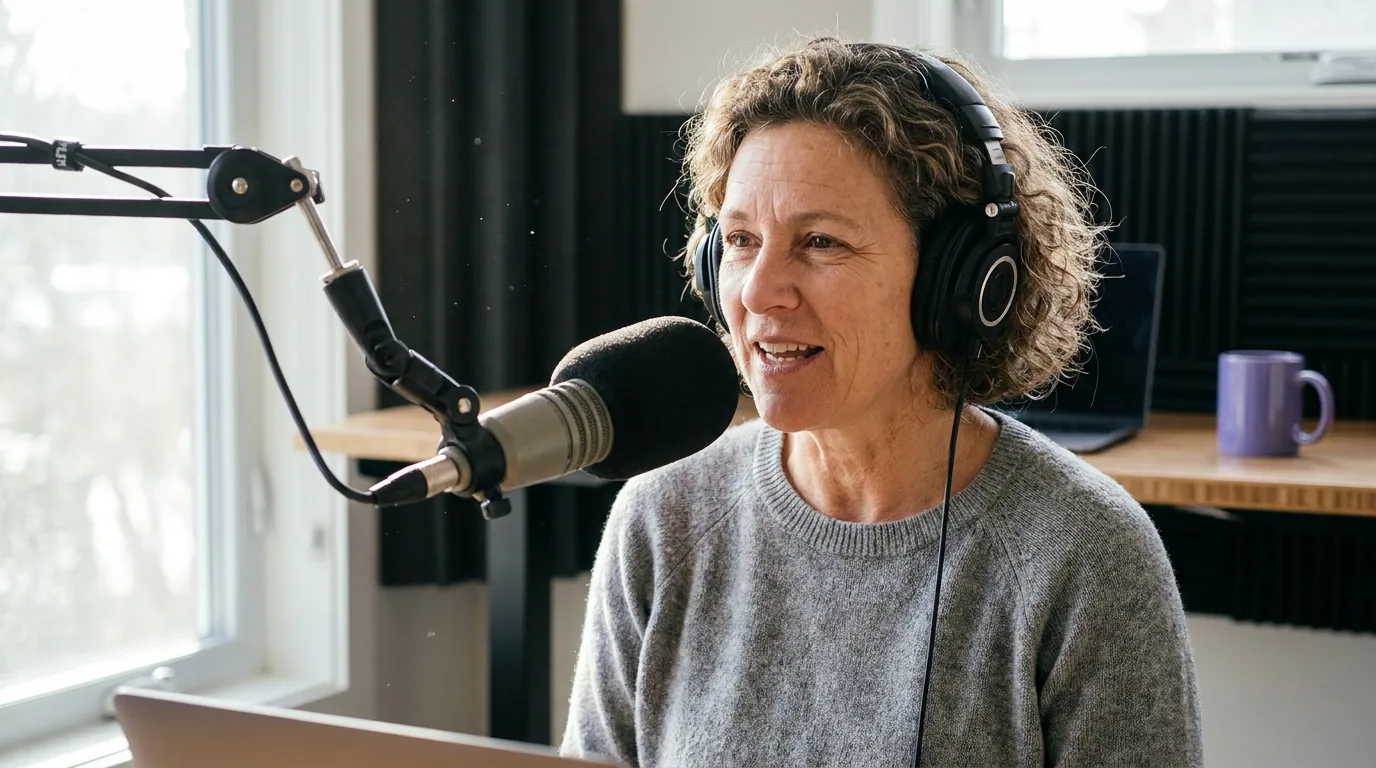
Pull the exact line your clip would open on. Read it with no context, no guest name in your head, no memory of the question that prompted it. If a stranger would lean in, open cold on it. If they'd think "wait, what is this about," the moment needs a setup beat before it. That single test settles most clips in about ten seconds.
A "setup beat" is not an intro. It's one short line, the host's question spliced from earlier, a name label, or a single text card naming the stakes, held for one to two seconds, then you drop straight into the moment. It buys legibility at the cost of one second of hook. You only pay that cost when the moment can't be understood without it. When it can, paying it is pure waste.
Run the test on mute, because that's how the moment first reaches most people. Feed video is mostly watched silently, Digiday reported about 85% of Facebook video played muted back in 2016 (Digiday; publisher-reported and directional, but the direction hasn't reversed). If your "first line" only works when heard, a cold open fails anyway and you need captions plus, often, a setup beat in text.
Cold open or setup first, by clip type
Different clip types fail in different ways, so the default open differs too. A debate clip is usually self-explanatory the instant two people clash. A story clip almost always needs a setup beat, because a story is meaningless without knowing whose it is and what's at stake. A hot take opens cold on the claim. An explainer needs the question it's answering. Here's the map.
Debate or clash → open cold
A debate clip works on sight. Two people disagreeing reads as conflict before anyone parses the topic, and conflict stops scrolls. Open on the sharpest line of the exchange, the interruption, the "that's just wrong," the moment the temperature spikes. The viewer doesn't need to know the full motion being debated to feel the friction and stay.
The trap is opening too early, on the polite buildup before the clash. Trim past it. If the disagreement is over something a stranger genuinely can't infer, a niche policy, an inside reference, add a four-word text card naming the topic, but keep the cold audio open underneath it. The clash carries; the card just labels.
Story or anecdote → setup first
A story is the one type that almost always needs a beat of context. "And then I just walked out" is meaningless without knowing who's talking and what they walked out of. Stories live on stakes, and stakes are exactly what a cold open strips away. Lead with the host's framing question or a one-line card: "She quit the day before her promotion. Here's why."
Then drop into the story and let it run. The setup beat is the price of admission for narrative; pay it once, up front, and the rest of the clip can be pure story. Skipping it doesn't make the clip punchier, it makes it illegible, which is the most common reason story clips underperform despite being the most rewatchable when framed right. This legibility-versus-hook tension is also covered in the broader breakdown of why podcast clips flop.
Hot take or claim → open cold
A hot take is its own hook. "College is a scam for most degrees" or "you're tracking the wrong metric" needs no runway, the claim is the thing that stops the scroll. Open on it, in the speaker's own words, and let the disagreement happen in the comments. Adding setup here actively dilutes: "we were discussing higher education when she said" buries the only line that matters.
The judgment call is whether the take is legible as a take. A claim that depends on a specific definition or prior statement isn't a clean hot take, it's an explainer wearing a hot take's clothes, and it needs the setup below. If you can read the line aloud at a party and get a reaction, it opens cold. The strongest of these slot neatly into hook openers that make people stop scrolling.
Explainer or how-to → setup first
An explainer answers a question, and an answer with no visible question floats. Lead with the question itself, "Why do most people negotiate salary wrong?", then let the explanation pay it off. The question is the contract: it tells the viewer what they're about to get, so they stay to collect it. Drop them straight into the middle of a step-by-step and they have no reason to.
You can deliver the question as the host's actual line or as a text card, but it has to come first. The good news is that explainer setups double as searchable hooks, a clear question on screen tells both the viewer and the algorithm what the clip is about. Keep it to one line, then teach without further preamble.
Common mistakes when choosing the open
- Defaulting to cold on every clip because it's the "rule." Cold is the default, not the law. A story or explainer that opens cold trades one second of saved hook for total confusion. Run the first-line test instead of applying one rule everywhere.
- Confusing a setup beat with an intro. A setup beat is one line, one to two seconds, then gone. "Welcome back, today we've got a special guest joining us" is not a setup beat, it's a sponsor-read-length stall that kills the open. If it's longer than a sentence, cut it.
- Putting the setup in audio only. On mute, spoken context doesn't exist. If a clip needs a setup, it usually needs that setup on screen as text or captions, not just in the spoken track most viewers can't hear.
- Opening cold on the buildup instead of the moment. A cold open is only as strong as the line you land on. Trim past the throat-clearing to the charged sentence. Starting cold three seconds before the hook is the worst of both worlds, no context and no payoff yet.
- Front-loading setup on a clip that doesn't need it. Over-explaining a self-evident clash or claim wastes the seconds that decide everything. If the first line already grabs, adding a card in front of it is friction, not help.
Tools: where the open gets decided
The open is a trim decision plus, sometimes, one overlay, both editorial, both doable in any video editor. What speeds it up is having the transcript and the timeline in one view, so you can scrub to the exact charged line and pull your in-point to it, then splice a setup question from earlier in the episode without an export-reimport loop.
An AI clipper helps by surfacing candidate moments, but it won't make the cold-versus-setup call for you. Knowing what AI clip detection actually catches, sentiment spikes, topic shifts, versus what it can't judge (whether a stranger can follow the open) tells you exactly where to intervene. The same applies when you're picking the keepers from a batch of suggestions: read each one's first line cold, then decide. QuickReel keeps clip generation, an editable timeline, captions, and text overlays in one pass, so setting an in-point and adding a one-line setup card is a scrub-and-type; Opus Clip, Vizard, and Klap all support trimming and text overlays too, and the decision rule works identically in any of them.