
Do Captions Actually Boost Video Retention?

Yes, for the short-form clips that grow a podcast, captions reliably lift completion and watch time. The most-cited number: 80% of consumers say they are more likely to finish a video when captions are available, from the Verizon Media and Publicis Media study of 5,616 US adults (3Play Media). The reason is mechanical, most social video plays muted by default, so a captionless clip is a silent clip.
The honest version has limits, and this page gives you both: the referenced upside, and the three situations where the lift shrinks to nearly nothing. If you only take one action from this, caption every vertical clip you post and skip the debate.
Do captions increase watch time?
In sound-off contexts, which is nearly all of short-form social, captions increase completion and view counts. The Verizon Media / Publicis Media study (April 2019, 5,616 US adults) found 80% of people are more likely to watch a video to the end with captions (3Play Media). Discovery Digital Networks' own A/B test reported captioned videos earned over 7% more views (3Play Media).
A few more named figures, so you are not relying on a single source:
- Facebook's internal test found captions raised average view time by roughly 12% (3Play Media).
- Verizon / Publicis measured an 8% lift in ad recall and a 10% lift in ad memory quality on mobile when captions were present (3Play Media).
One caveat worth stating because most blogs hide it: the 80% figure is self-reported intent ("more likely to finish"), not a measured completion rate from a controlled test. It is still useful and widely cited, but it is a survey answer, not a server log. The 7% and 12% figures are measured, and they come from studies that are several years old and re-cited constantly in 2025 marketing posts. Treat the whole set as directional, not as a guaranteed number for your channel.
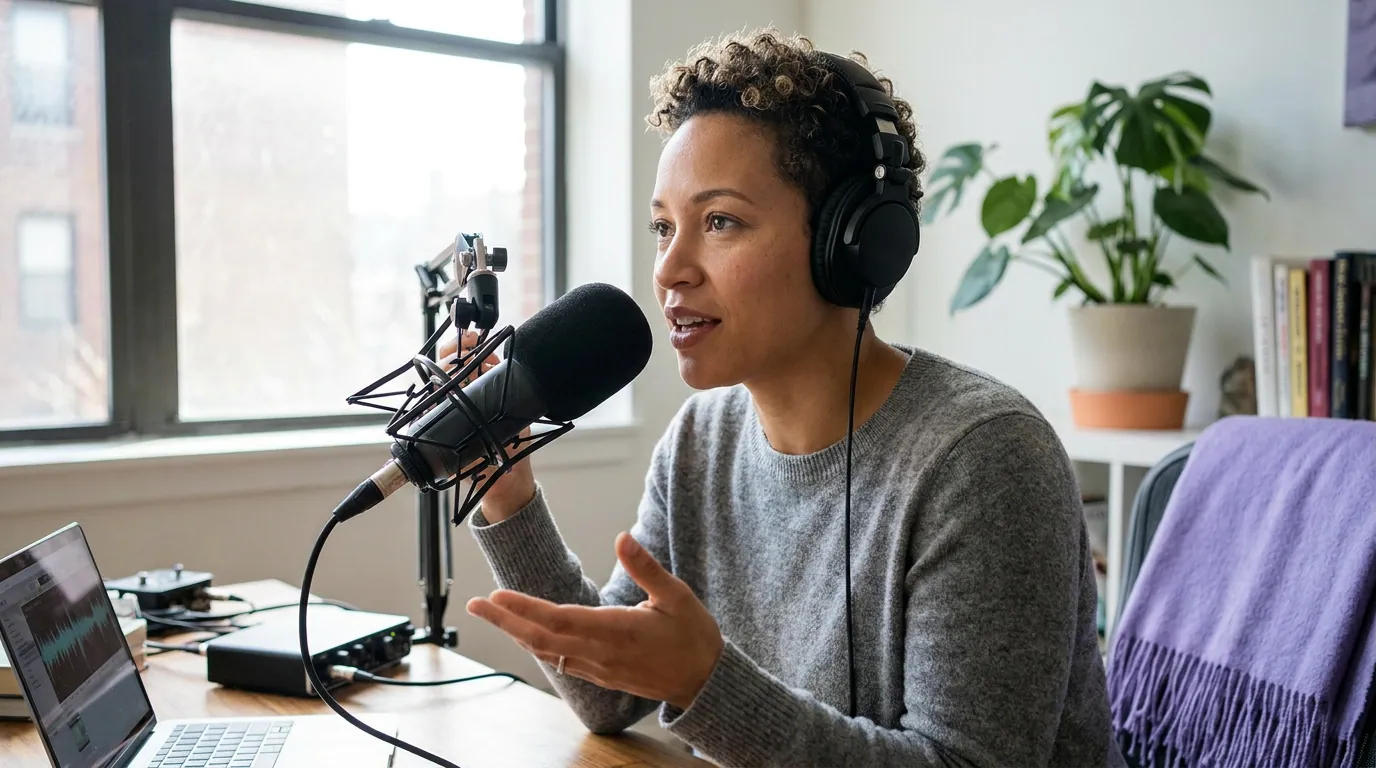
Why captions help: video is watched on mute
The mechanism is not motivation, it is audio. The platforms autoplay video silently, so the default state of your clip in a feed is no sound. Sharethrough's research found about 75% of people often keep their phones muted while watching video (Digiday). Earlier publisher-reported data put it higher: Facebook publishers said roughly 85% of video was watched without sound (Nieman Lab).
Both numbers are publisher- or vendor-reported and somewhat dated, so the honest read is a range, call it three out of four to four out of five viewers, sound off. Either way the conclusion holds: a clip without captions is, for most of its audience, a person talking with no words. They swipe. That is your retention drop, and captions close it.
There is a second, smaller effect. The Verizon / Publicis work and others point to dual-channel reinforcement, reading along with audio helps comprehension and memory (3Play Media). It is real, but for short-form it is a rounding error next to the sound-off problem. Caption for the muted scroller first; the memory benefit comes free.
Where "captions always help" breaks down
Captions are close to free upside, but the lift is not uniform. Three situations where it thins out:
- Audio-led content already watched with sound. A long-form interview viewed on a desktop with headphones, or a music-heavy clip people deliberately listen to, gets little completion lift from captions, those viewers already had the audio. Captions still add accessibility and SEO value, but do not expect a watch-time jump.
- Bad captions actively hurt. Mis-synced lines, wrong words from a noisy transcript, or text covering the speaker's face cost you more attention than no captions. A wrong word in the first second reads as low effort and gets swiped. This is why the fix-caption-accuracy workflow matters more than the decision to caption at all.
- Captions that bury the hook. If the most important visual moment, a reaction, a chart, a face, is hidden behind a four-line caption block, retention drops. Captions help when they support the first three seconds of the clip, not when they fight the visual for the same pixels.
The takeaway from these caveats is not "skip captions sometimes." It is: caption every clip, because the cost is near zero, but expect the dramatic completion gains on muted, dialogue-led vertical clips, not on a sound-on desktop interview.

Will the lift show up on your clip? A quick score
The studies report averages across thousands of videos. Your clip is one video. Whether you see something near the high end (the 80%-likelihood, 12%-watch-time territory) or close to nothing depends on a few traits of the clip itself. Score yours before you set an expectation, give one point for each box that's true:
- The clip is vertical (9:16) and posted to a feed-first surface, Reels, Shorts, TikTok.
- The audience is mostly cold, strangers in a recommendation feed, not your existing subscribers.
- The content is dialogue-driven, the value is in what's said, not in music or visuals.
- The captions are accurate (above ~95%) with no obvious wrong word in the first second.
- The captions sit below the face and don't cover the speaker or the hook visual.
4–5 points: you are in the zone where the named studies' gains apply most directly. Captions are doing the heavy lifting; treat them as non-negotiable.
2–3 points: captions still help, but expect a smaller bump than the headline numbers. The limiting factor is probably the surface or the audience, not the captions.
0–1 point: a sound-on, already-engaged, or visual-led clip. Caption it for accessibility and search, but do not bank a completion jump, the audio was never the gap.
This is the part the competitor posts skip. They quote 80% and stop, as if every clip inherits it. The honest read is that the 80% lives almost entirely in the 4–5-point row, and the average is dragged down by everything below it.
How to measure the lift yourself
Because the public numbers are averages from old studies, the only figure that settles the question for your channel is your own. It costs one comparison:
- Pick a metric. On most platforms the cleanest signal is completion rate (or average percent viewed), not raw views, which the algorithm muddies. Native analytics expose this: Instagram and TikTok call it average watch time or percent watched; YouTube Shorts shows it in the retention graph.
- Hold everything else constant. Same show, similar clip length, similar topic energy. The only variable you're testing is captions versus none, so don't also change the hook or aspect ratio in the same test.
- Post the captioned version; compare against a comparable uncaptioned clip from your back catalog, or run a true A/B test on the clip if your tooling supports it.
- Read the completion rate, not the like count. A captioned clip that holds 10–15 points more of its audience to the end is the lift the studies describe, measured on your show, not borrowed from 2019.
One caveat on the method: a single pair of clips is anecdote, not data. Run it across three or four pairs before you trust the direction. The studies are your prior; your own completion rate is the posterior.
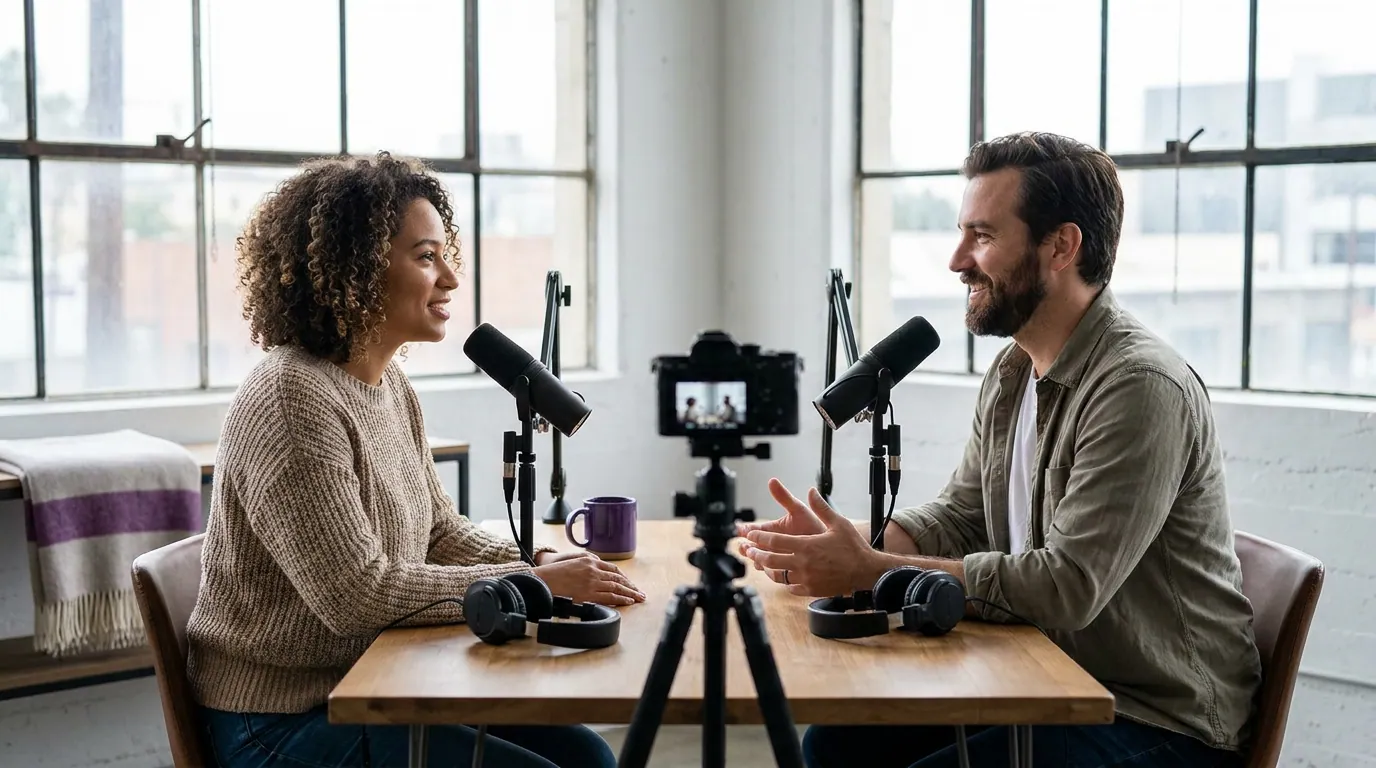
How to actually capture the lift
Knowing captions help is the easy part. Capturing the retention gain takes four specific moves:
- Burn them in for short-form. Uploaded SRT files do not show on autoplay previews and get stripped on cross-posts. For clips, burned-in captions beat soft captions because they always render, muted or not.
- Keep accuracy above ~95%. Auto-captions are fast but make errors on names, jargon, and crosstalk. Whether you auto-caption or do it manually, run a review pass, the add-captions workflow walks the full route.
- Pick a legible font and size. Thin or tiny text loses the muted reader you are trying to keep. The caption font guide covers what holds up at phone size.
- Position under the action, not over it. Keep the lower third for text and the center for the face. Captions should reinforce the hook, never hide it.
Do those four and you get the measured upside instead of the theoretical one.
FAQ
Do captions help on YouTube long-form, or only short clips? The retention lift is strongest on muted short-form. On long-form watched with sound, captions add accessibility, comprehension, and search indexing more than raw completion. Add them everywhere, just expect the watch-time jump on the vertical clips, not the hour-long episode.
Are auto-captions good enough to get the benefit? Usually yes, after a review pass. Auto-captions get you 90–95% of the way, but errors on names and jargon read as low effort and cost attention. Fix the obvious mistakes before posting; the caption-accuracy workflow shows where they cluster.
How much does the watch-time number actually go up? The named studies report a self-reported 80% "more likely to finish" (Verizon/Publicis) and a measured ~12% watch-time lift (Facebook), via 3Play Media. Those are older, re-cited figures, directional, not a guarantee for your channel. Treat captions as table stakes, then measure your own completion rate.
Do captions hurt retention in any case? Bad ones do. Mis-synced lines, wrong words, or text covering the speaker's face cost more attention than no captions. The fix is accuracy and placement, not skipping captions.