
The Best Microphone for a Panel Podcast (3-4 Hosts)

For a 3–4 host panel, buy four matching dynamic XLR mics, the RØDE PodMic (~$99) or Shure SM58 (~$109), and run them into a 4-input recorder like the Zoom PodTrak P4 (~$180) or RØDECaster Pro II (~$680). The mic choice barely changes once you pass two people. What makes or breaks a panel is matched gear, enough inputs, and a headphone jack per seat.
Most "best panel mic" articles just re-rank the same fifteen mics a solo guide already covered. That misses the actual problem. With one host, the mic is the whole decision. With four, the mic is maybe a third of it, the rest is how many XLR inputs you have, whether everyone can hear themselves, and how much of each person's voice leaks into the other three mics. This guide budgets per seat, does the input-count math, and explains why bleed gets worse the more people you add. Prices were checked against manufacturer and major-retailer pages in mid-2026; retailer sales move, so treat them as street anchors.
The short answer, by panel size
| Panel size | The setup | All-in ballpark |
|---|---|---|
| 3 hosts | 3× RØDE PodMic (~$99 ea) + Zoom PodTrak P4 (~$180) | ~$475 |
| 4 hosts | 4× RØDE PodMic (~$99 ea) + Zoom PodTrak P4 (~$180) | ~$575 |
| 4 hosts, upgrade | 4× RØDE PodMic (~$99 ea) + RØDECaster Pro II (~$680) | ~$1,075 |
Swap in Shure SM58s (~$109 ea) and each row climbs ~$10 per seat, a four-host SM58 panel runs ~$616 all-in with the P4.
All three picks lean on the same two rules: one dynamic cardioid mic per person for noise rejection, and a recorder with as many XLR inputs and headphone jacks as you have seats. The Zoom PodTrak P4 is the workhorse here because it carries four XLR inputs and four headphone outputs in a sub-$200 box (Zoom). Almost nothing else at that price does both.
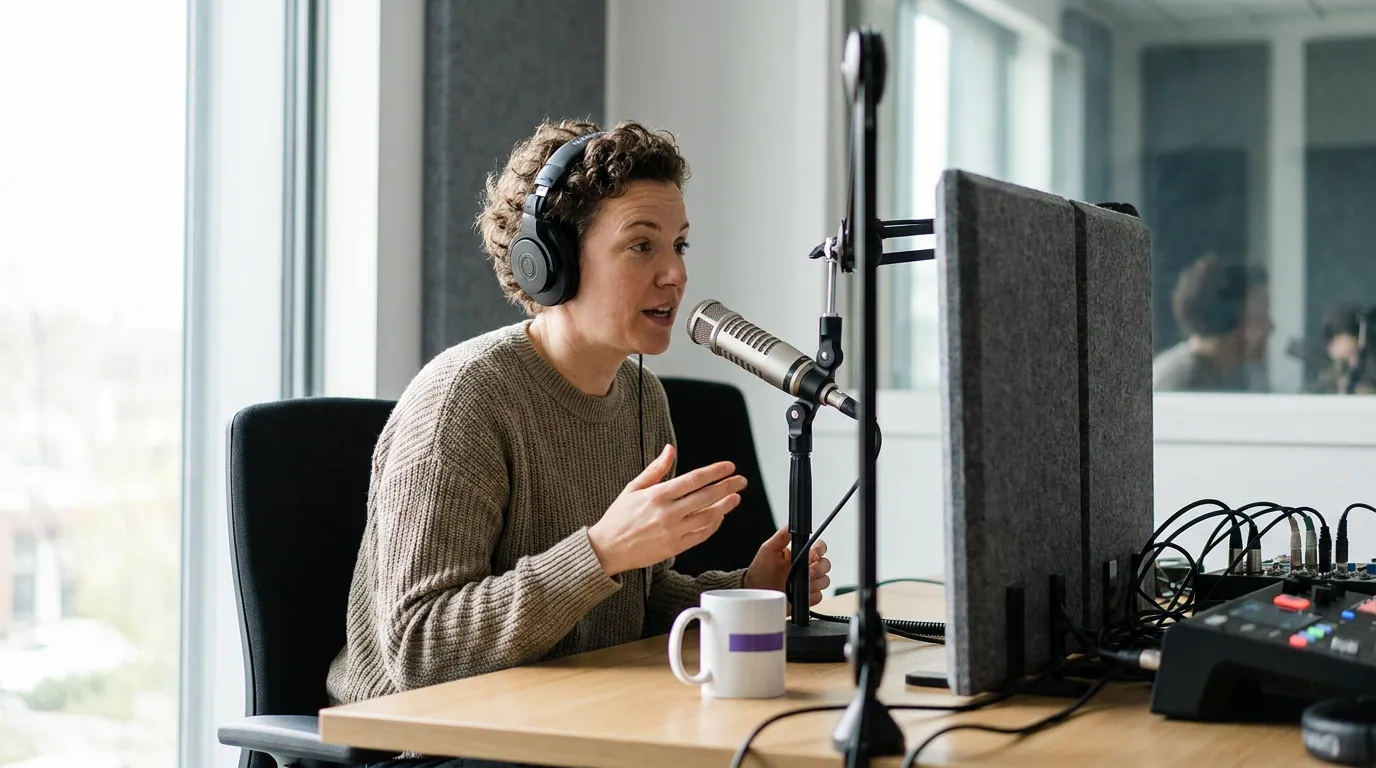
Why the mic matters less once you pass two people
With a solo show, upgrading from a $60 mic to a $400 mic is a real, audible jump. On a four-person panel, that same upgrade is mostly wasted, because four mics in one room create problems no single mic can fix: bleed, level mismatch, and monitoring. Spend the SM7B money on a better recorder and a treated room instead, and the panel sounds better than four expensive mics into a two-input interface ever will.
This is the inversion that trips people up. The solo question is "which mic." The panel question is "which system," and the mic is one component of it. If you're outfitting a single host or co-host pair first, our budget-tier mic guide ranks the single-mic picks properly. Past two seats, keep reading.
The per-seat cost breakdown
Here's the number nobody publishes: divide the recorder's price across the seats and add the mic, and you get a true per-seat cost. That's the figure that tells you whether a panel is affordable, because it scales with your table.
The takeaway: a four-person broadcast-grade panel runs roughly $269 per seat, and a perfectly good four-person panel runs about $144 per seat. The recorder, split four ways, is what separates them, the mics are nearly identical money. (These figures are mic plus a share of the recorder only; add ~$15–$40 per seat for an XLR cable, a stand or boom arm, and headphones.)

Matched mics, not your favorite mic, the one rule people break
Use four identical mics. Not three PodMics and the SM7B you already owned. Mismatched mics give each voice a different tone, a different sensitivity, and a different gain setting, and a listener's ear catches the seam instantly when the conversation cuts between people. Matching is cheaper and sounds more professional, which is rare.
Matching also fixes a subtler problem: gain staging. Identical mics need near-identical gain, so your levels start balanced instead of one host booming while another whispers. On a panel, balanced levels are half the battle, and matched mics hand you that for free.
If your hosts insist on bringing their own gear, the floor is "all dynamic, all cardioid, all roughly the same sensitivity." Mixing a sensitive condenser into a panel of dynamics is the fastest way to a muddy, bleed-soaked recording.
The input-count math (this is the real decision)
Count your seats. That's how many XLR inputs and how many headphone outputs you need. Both numbers matter, and the second one quietly kills a lot of budget panels.
The popular Focusrite Scarlett 2i2 is a great solo/duo interface, but it has only two inputs, it physically cannot record a panel. Stepping up to a real four-input box is non-negotiable. And here's the catch most buyers miss: the Scarlett 18i16 has four mic preamps but only two headphone outputs (Focusrite). On a four-person panel that means two hosts can't hear themselves unless you add a headphone splitter or amp.
That's exactly why podcast-first recorders win for panels. The Zoom PodTrak P4 gives you four XLR inputs and four dedicated headphone jacks, each with its own volume knob (Zoom). The RØDECaster Pro II does the same with broadcast-grade preamps and onboard processing (RØDE). If you're weighing the older interface route against an all-in-one, our USB vs XLR primer covers the wiring tradeoffs before you spend.
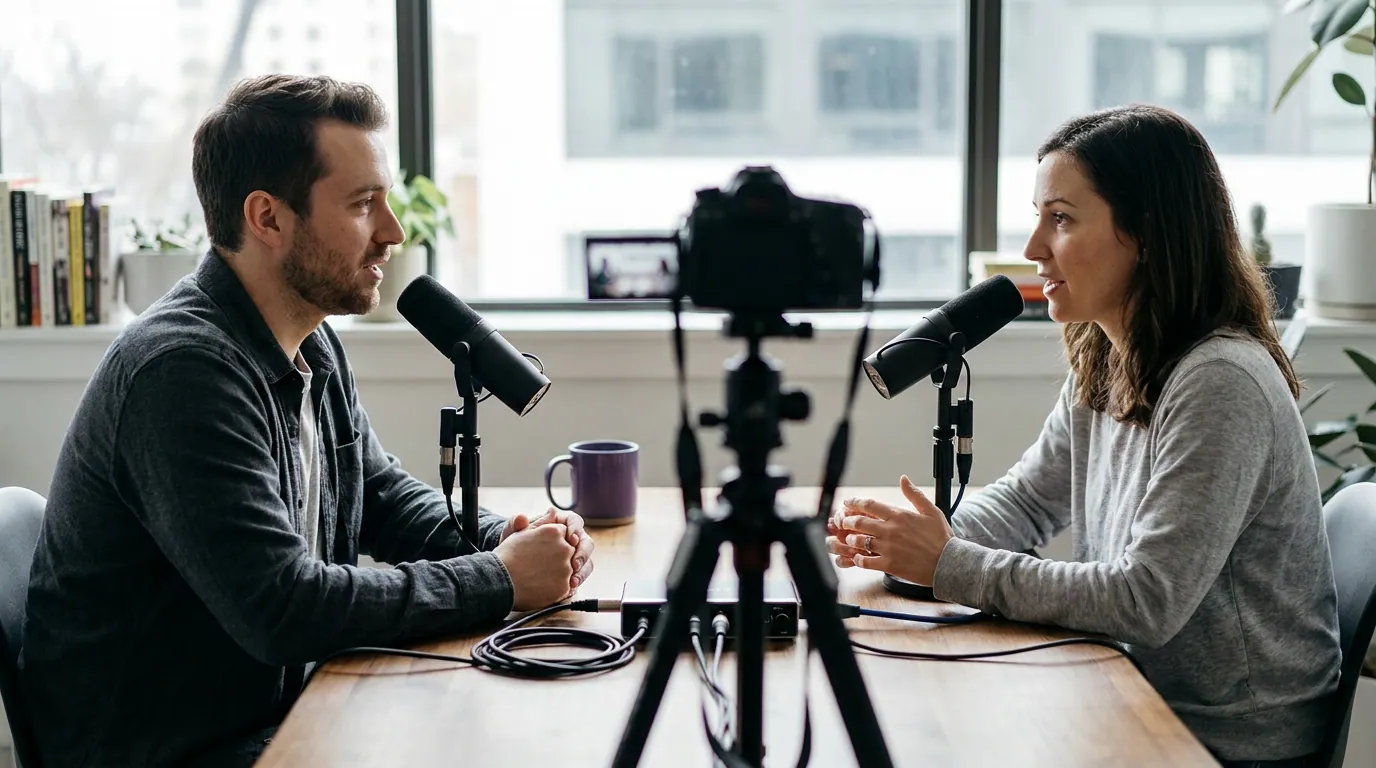
Why bleed control gets harder past two people
Bleed is each mic picking up voices it shouldn't, host 2's words leaking into host 1's mic. With two people facing away from each other, it's manageable. Add a third and fourth, and the geometry works against you: more sources, tighter spacing, and mics that can no longer all point away from every other speaker.
The fix is mostly free, and it's why every pick here is a dynamic cardioid mic. Dynamics pick up sound up close and reject off-axis voices far better than condensers, so each mic mostly hears its own host. The Shure SM58's cardioid pattern is specifically prized for rejecting bleed and feedback in rooms with multiple sound sources (Shure), which is exactly a panel. Then add technique: get close to the mic (two to three inches), keep a "one mic, one mouth" discipline, and have hosts mute when they're not talking. The RØDECaster Pro II's per-channel noise gate automates that last part in real time (RØDE).
The mic picks for a panel
Shure SM58 (~$109), the bombproof panel default The SM58 is the live-stage legend that doubles as a near-perfect panel mic. Its cardioid pattern is built to reject bleed and feedback when multiple voices compete for the room, it has a built-in pop filter and almost no handling noise (handy if mics get passed), and it's famously indestructible (Shure). At ~$109 each (Sweetwater, mid-2026) four run about $436.
Pros: Outstanding off-axis rejection; forgiving in untreated rooms; durable; cheap enough to buy four. Cons: XLR-only (needs an interface or recorder); slightly higher noise floor than pricier mics, so dial in clean gain. For a panel, the standard SM58 beats the brighter Beta 58A, its more forgiving pattern is easier to manage across four seats.
RØDE PodMic (~$99), the broadcast-look panel mic The PodMic is a dynamic XLR broadcast mic with an internal pop filter and a heavier, more "podcast desk" look on camera (RØDE). It pairs naturally with the RØDECaster Pro II, and four PodMics on boom arms is one of the most-recorded panel setups in podcasting. Same caveat as the SM58: it's XLR-only and needs an interface with a strong preamp.
Pros: Rich broadcast tone; internal pop filter and shockmount; looks the part on video panels. Cons: XLR-only; needs a decent preamp; stand/arm bought separately.
Samson Q2U / ATR2100x-USB (~$60–$70), only if you skip the recorder If you genuinely can't afford a four-input recorder yet, four USB mics into four laptops (or one USB hub setup) is a real fallback. The Samson Q2U runs ~$60–$70 and carries both USB and XLR, so it's not a dead-end buy, when you add a recorder later, the same mics run over XLR (The Podcast Host). The near-identical Audio-Technica ATR2100x-USB does the same, though it's being phased out, so the Q2U is the safer four-of-a-kind buy.
Pros: Cheapest path; USB means no interface needed; hybrid XLR future-proofs the buy. Cons: Running four USB mics into one computer is fiddly and often needs multitrack software; you lose the clean per-seat monitoring a real recorder gives you. This is a stopgap, not the goal. For more sub-$100 options, see the best podcast mic under $100.
Hybrid USB/XLR mics (PodMic USB, Shure MV7+), flexible but pricier per seat A hybrid like the RØDE PodMic USB (~$199) or Shure MV7+ (~$299, often ~$269 on sale) does USB and XLR both. On a panel, the hybrid trick rarely pays off, you're committing to XLR into a shared recorder anyway, so you're paying a USB premium you won't use four times over. Hybrids shine for a solo host who travels; for a fixed panel table, plain XLR dynamics are better value. The full case for hybrids is in our USB/XLR hybrid mic guide.

The recorder is the panel's real brain
Your mics all feed one box, and that box decides how clean the panel is. Two picks cover almost every panel.
Zoom PodTrak P4 (~$180, often ~$180–$200). Four XLR inputs, four headphone outputs with individual volume, mix-minus for remote callers, sound pads, battery power, and SD-card multitrack recording (Zoom; Sweetwater). For under $200 it does everything a four-host panel needs. The newer P4next (~$180) adds AI noise reduction and true 24-bit/48kHz recording for video work at roughly the same money, if you're buying fresh today, it's the better pick of the two.
RØDECaster Pro II (~$680). Four combo XLR inputs with broadcast preamps, four headphone outputs, per-channel APHEX DSP (noise gate, compressor, high-pass), sound pads, Bluetooth and dual USB for remote guests, and multitrack recording (RØDE). It's overkill for a brand-new show and worth every dollar once a panel is your format and you're recording weekly.
Skip the bare audio-interface route (Scarlett 18i16 and similar) unless you're already comfortable mixing in a DAW and you solve the headphone-output gap with a splitter or amp. The four-mic-preamp count is right, but only two headphone outputs means two of your four hosts can't monitor, a real problem mid-record (Focusrite).
How we picked these
Four criteria, in panel order: matched-mic value (can you buy four of the same mic affordably), bleed rejection in a real room (every pick is dynamic cardioid for this reason), inputs and headphone outputs equal to the seat count (the spec budget panels skip), and verified mid-2026 street price from manufacturer and major-retailer pages. We organized by panel size and per-seat cost instead of a flat mic ranking, because on a panel the system, not any single mic, is the decision.
The single most useful thing this guide can tell you: the gap between a $150 and a $1,500 setup is smaller than the gap between bad mic technique in a noisy room and good technique in a treated one (Ausha puts a usable starter rig at $70–$300). Four SM58s in a blanket-draped room, each two inches from a mouth, beat four SM7Bs scattered across an echoey table every time.
Who should buy what
- Three hosts, tight budget: 3× RØDE PodMic (~$99 ea) + Zoom PodTrak P4 (~$180). ~$475 all-in (3× SM58 instead: ~$507).
- Four hosts, best value: 4× RØDE PodMic (~$99 ea) + Zoom PodTrak P4 (~$180). ~$575 all-in (4× SM58 instead: ~$616).
- Four hosts, weekly show, going video: 4× PodMic (~$99 ea) + RØDECaster Pro II (~$680). ~$1,075 all-in.
- No recorder budget yet: 4× Samson Q2U (~$60–$70) over USB as a stopgap, then add a recorder and switch to XLR.
Whatever you buy, plan the show before the gear. A repeatable episode structure keeps a four-person conversation from sprawling, and a clear call on scripting vs outlining matters more on a panel than solo, because four voices need a shared map.
FAQ
What's the best microphone for a panel podcast on a budget? Four matching RØDE PodMics (~$99 each) into a Zoom PodTrak P4 (~$180), about $575 all-in for four hosts. The PodMic's cardioid pattern rejects bleed between mics (RØDE), and the P4 supplies four XLR inputs and four headphone jacks (Zoom), the two specs a panel actually needs. Four Shure SM58s (~$109 each) run about $616 and trade slightly higher cost for legendary durability.
How many XLR inputs do I need for four hosts? Four, one per host, plus four headphone outputs so each person can monitor. A two-input interface like the Scarlett 2i2 can't record a panel, and even the four-input Scarlett 18i16 has only two headphone outs (Focusrite). A podcast recorder like the PodTrak P4 or RØDECaster Pro II covers both.
Should all four hosts use the same microphone? Yes. Matched mics give every voice the same tone and sensitivity, so levels start balanced and the recording has no audible seam when it cuts between hosts. Mixing models, especially a condenser among dynamics, creates tone mismatch and extra bleed.
Why does mic bleed get worse with more people? Each added host creates more bleed paths and crowds the table, so mics can no longer all point away from every other speaker. The fixes are dynamic cardioid mics (which reject off-axis voices), close mic placement, and muting when not speaking, the RØDECaster Pro II can gate each channel automatically (RØDE).
Can I use USB mics for a four-person panel? As a stopgap, yes, four hybrid USB/XLR mics like the Samson Q2U work, but running four USB mics into one computer is fiddly and you lose clean per-seat monitoring. The better path is XLR dynamics into a four-input recorder. The hybrids' XLR mode means the same mics carry over when you upgrade (The Podcast Host).